Why Are My Colored Contacts Blurry? 7 Common Causes and What to Do
Jul 24,2026 | EYEVOS
Why Are My Colored Contacts Blurry? 7 Common Causes and What to Do
Last updated: July 23, 2026
Short Answer
Colored contacts may make your vision blurry if the lens is inside out, off-center, dry, dirty, damaged, poorly fitted, or not matched to your vision prescription. Peripheral blur or halos may also happen when the colored area moves close to your pupil, especially in dim light.
If the blur is sudden, persistent, or accompanied by pain, redness, light sensitivity, unusual tearing, discharge, or swelling, remove the lenses immediately and contact an eye care professional. (nei.nih.gov)
First: When Should You Remove Your Colored Contacts?
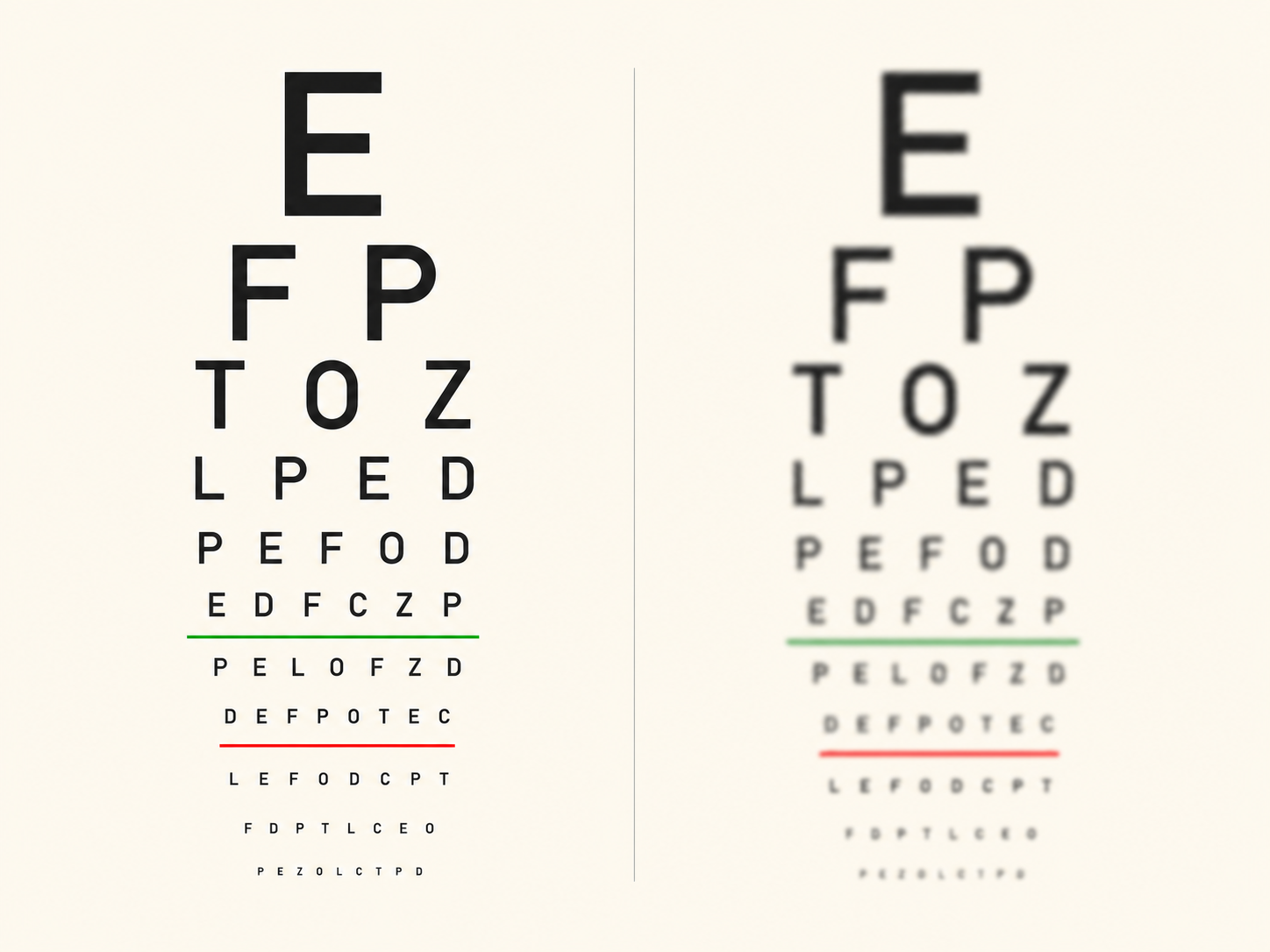
Remove your colored contacts if your vision is not clear or if your eyes feel uncomfortable.
Do not continue wearing them to finish your makeup, take photos, or “wait for your eyes to adjust.”
Remove the lenses immediately if you notice:
- Sudden or persistent blurry vision
- Eye pain
- Significant redness
- Burning or scratching
- Unusual sensitivity to light
- Excessive tearing
- Unusual discharge
- Swelling
- A torn or damaged lens
- A lens that feels stuck or cannot be removed normally
The National Eye Institute recommends removing contact lenses when you experience eye pain, red eyes, light sensitivity, sudden blurry vision, unusually watery eyes, or discharge. If the symptoms do not improve or get worse, contact your eye doctor. (nei.nih.gov)
Gentle reminder: Do not drive or continue any activity that calls for clear vision while your contacts are causing your vision to be blurry.
What Does Your Blurry Vision Feel Like?
The timing and pattern of the blur can offer useful clues, although only an eye care professional can determine the exact cause.
|
What you notice |
Possible reason |
What to do first |
|
Blurry immediately after insertion |
Inside-out lens, debris, wrong lens, damage, or incorrect prescription |
Remove and inspect the lens |
|
Clear after blinking, then blurry again |
Dryness or an unstable tear layer |
Remove the lens if the blur keeps returning |
|
Vision changes every time the lens moves |
Poor centration or a fit problem |
Stop wearing it and arrange a fit check |
|
Peripheral blur or halos in dim light |
Colored area near the pupil or a small clear optical zone |
Remove the lens if it affects your vision |
|
Only one eye is blurry |
Debris, damage, wrong lens, prescription, or fit difference |
Check each lens separately outside the eye |
|
Blur becomes worse after several hours |
Dryness, deposits, overwear, or a care issue |
Remove the lenses and rest your eyes |
|
Blur comes with pain, redness, or discharge |
Irritation, injury, or possible infection |
Remove immediately and seek professional care |
1. Why Are My Colored Contacts Blurry Right After I Put Them In?
Immediate blur frequently indicates the lens is inside out, off-center, dirty, damaged, or on the wrong eye.
Remove the lens with clean, dry hands and inspect it in good lighting. Check whether:
- The lens is inside out
- It has moved away from the center of your eye
- You switched the right and left lenses
- Makeup, skin oil, lint, or another particle is on the lens
- The edge is torn, cracked, warped, or irregular
- The lens prescription corresponds to the correct eye
FDA-approved contact lens instructions identify an off-center lens, an inside-out lens, contamination with cosmetics or oils, a lens placed on the wrong eye, and a torn or damaged lens as possible causes of blurry or uncomfortable vision. If the lens is damaged, it should be discarded rather than returned to the eye. (accessdata.fda.gov)
If you wear daily disposable contacts, do not clean and reuse the blurry lens—discard it and use a fresh one. Reusable lenses should only be cleaned and disinfected according to the product instructions and your eye care professional’s directions. (cdc.gov)
If the blur returns after reinsertion, stop wearing the lenses and contact an eye care professional.
2. Why Does My Vision Clear Whenever I Blink, Then Become Blurry Again?
A vision that briefly clears after blinking and then blurs again may be related to dryness or an unstable tear layer on the lens.
A blink temporarily spreads tears across the contact lens surface. If that tear layer breaks up too quickly, vision may again look foggy, smeared, or inconsistent. Research has connected tear-film breakup during contact lens wear with lower optical quality and blurry vision. (pmc.ncbi.nlm.nih.gov)
You may observe this pattern more often when:
- Looking at a phone or computer for a long time
- Wearing the lenses for several hours
- Sitting in air conditioning or a dry environment
- The lens surface is becoming less wettable
- The lenses are approaching the end of their replacement period
If blinking merely improves your vision for a few seconds, do not keep blinking through the problem all day. Remove the lenses and give your eyes a break.
Only use rewetting drops labeled as compatible with contact lenses and recommended for your lens type, or as recommended by your eye care professional. Do not use a random eye drop while wearing contacts. The FDA advises wearers to use lens solutions and eye drops recommended by their eye care professional. (fda.gov)
3. Why Does My Colored Contact Move and Make My Vision Blurry?
If your vision changes with every blink because the lens slides away from your pupil, the lens may not be centered or fit correctly.
A properly fitted contact lens should be assessed on the eye—not selected only by comparing numbers on a product page. During a contact lens fitting, an eye care professional checks how the lens sits and moves and tests your vision through it. (cdc.gov)
Base curve and diameter are useful specifications, but they do not tell the whole story. Two lenses with similar numbers can still differ in material, shape, edge design, and how they behave on your eye.
Possible signs of a fit or centration issue include:
- The lens repeatedly slides away from the pupil
- Vision changes after every blink
- One lens moves more than the other
- The lens folds, curls, or will not hold its shape
- You can only see clearly when looking in a certain direction
- The lens feels unusually tight, loose, or unstable
Do not repeatedly push, rotate, or reposition an uncomfortable lens with your finger. Remove it instead. If the problem continues with a fresh, undamaged lens, arrange a professional fit check.
Decorative contact lenses are not one-size-fits-all. In the United States, they are regulated medical devices and require a valid prescription and proper fitting, even when they have no corrective power. (cdc.gov)
4. Why Is My Peripheral Vision Blurry in Colored Contacts?
Peripheral blur may happen when the colored portion of the lens moves close to your pupil or when your pupil expands beyond the clear central optical zone.
Most colored contacts have a transparent center for vision and a printed or tinted area around it to change the iris's appearance. If the lens shifts, part of the colored area may move closer to your line of sight.
This effect may become more noticeable in low light because the pupil normally becomes larger. Some people describe it as:
- A dark ring near the edge of their vision
- A blurry halo
- Foggy vision on the left and right sides
- Clear central vision with blurry peripheral vision
- Vision that changes when the lens moves
Clinical research has found that decorative tinted lenses with smaller pigment-free optical zones can reduce optical quality and contrast sensitivity, particularly when the colored area partially covers the pupil. (pubmed.ncbi.nlm.nih.gov)
A brief awareness of the lens edge is not the same as vision being meaningfully obstructed. If the colored area limits your vision, creates strong halos, or makes it difficult to walk, read, or see in low light, remove the lenses.
Do not drive while your peripheral vision is blurry or restricted.
5. Can Astigmatism Make Colored Contacts Look Blurry?
Yes. Standard spherical or plano-colored contacts may not provide clear vision if you have astigmatism that requires correction.
Astigmatism is a common refractive error that can cause blurred or distorted vision. It happens when the cornea or the lens inside the eye has an abnormal shape, causing light to focus unevenly. (nei.nih.gov)
A plano lens has zero corrective power. It changes the appearance of your eye but does not correct:
- Nearsightedness
- Farsightedness
- Astigmatism
- Other vision changes
Having astigmatism does not automatically mean you cannot wear colored contacts. However, some wearers may need professionally fitted toric contacts or another type of correction rather than standard spherical colored lenses.
Do not diagnose astigmatism based on a social media comment or choose toric lenses by guessing the power and axis. An eye exam is the only reliable way to determine whether you have astigmatism and what correction you need. (nei.nih.gov)
6. Can Dryness, Makeup, or Deposits Make Colored Contacts Foggy?
Yes. A dry or coated lens surface can make your vision look foggy, greasy, or inconsistent.
Throughout the day, a lens surface may collect:
- Tear-film deposits
- Skin oils
- Makeup
- Dust or lint
- Residue from improper cleaning
- Old or incompatible care solution
FDA-approved patient instructions list cosmetics, oils, and particles on a contact lens as possible causes of blurry vision. (accessdata.fda.gov)
To reduce contamination:
- Wash and dry your hands before handling lenses
- Insert your contacts before applying makeup
- Remove contacts before removing makeup
- Keep eyeliner and mascara away from the lens surface
- Rub and rinse reusable lenses as directed
- Use fresh disinfecting solution every time
- Never mix fresh solution with old solution
- Never clean or store lenses in water or saliva
The CDC and FDA advise using fresh contact lens solution, avoiding “topping off,” and keeping contact lenses away from tap, bottled, distilled, lake, and ocean water. (cdc.gov)
If you recently changed your care solution and then developed repeated fogging, burning, or irritation, stop experimenting with different products and ask your eye care professional which care system is suitable for your lenses.
7. Can a Torn, Expired, or Damaged Colored Contact Cause Blurry Vision?
Yes. Never wear a colored contact that is torn, cracked, warped, dried out, or irregularly shaped.
Even a small damaged area can affect how the lens sits in the eye. It may also cause scratching, irritation, tearing, or unstable vision.
Do not wear the lens if:
- There is a small tear along the edge
- The lens has a hole
- It arrived cracked or split
- It is no longer completely round
- One area appears raised, rough, or misshapen
- The lens dried out and became brittle
- It tore while you were inserting or removing it
FDA-approved lens instructions state that torn or damaged lenses should not be reinserted into the eye and should be discarded and replaced. (accessdata.fda.gov)
A lens should also be replaced according to its designated schedule. Daily disposables are used once and discarded, while planned-replacement lenses must be replaced according to the schedule given by the eye care professional. Wearing lenses longer than recommended may cause discomfort and other complications. (cdc.gov)
If a damaged lens caused pain, redness, ongoing blur, or a impression that something is still in your eye, contact an eye care professional.
What Should You Do If Your Colored Contacts Are Blurry?
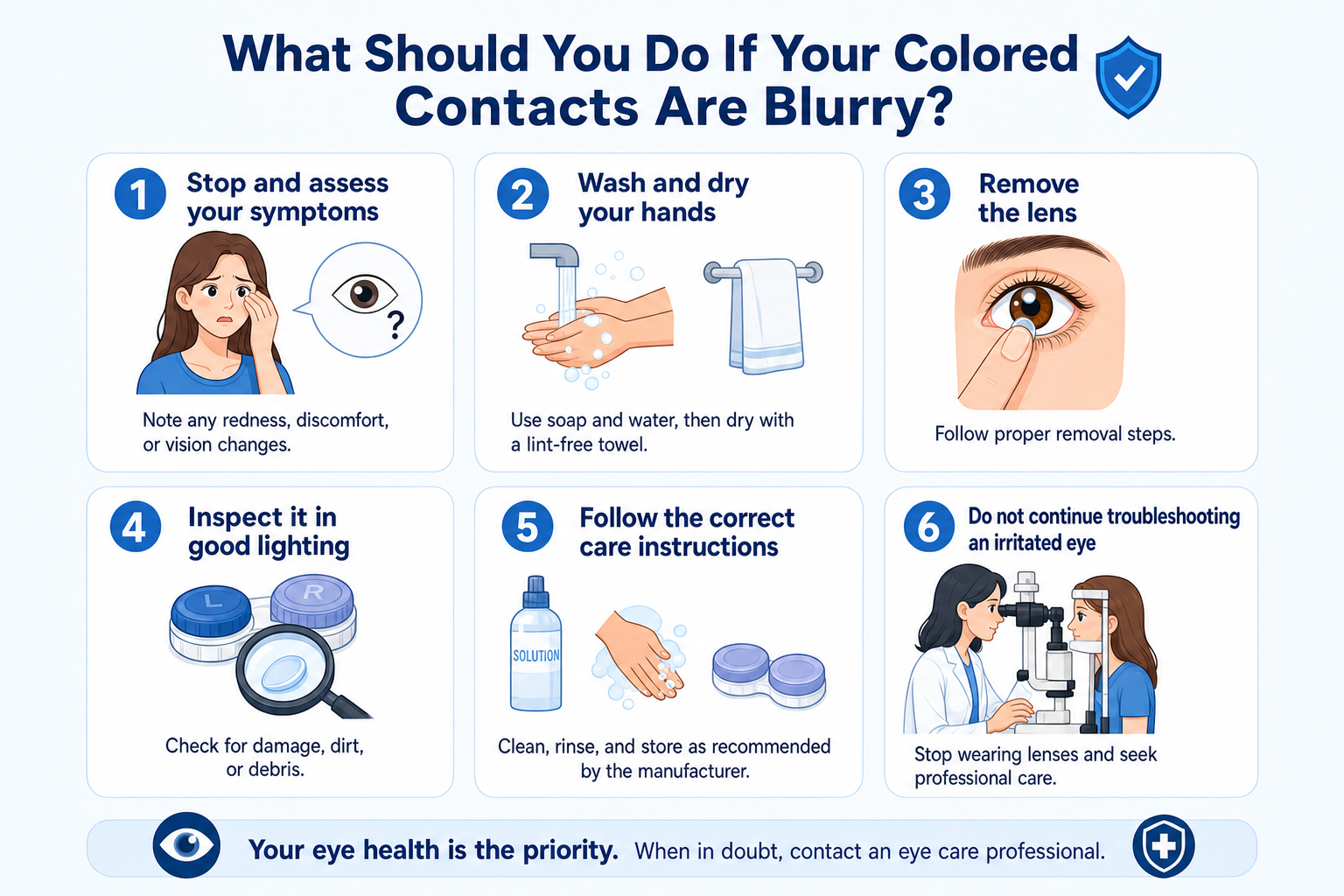
Step 1: Stop and assess your symptoms
Do not drive, keep applying makeup, or continue taking photos while your vision is impaired.
If you have pain, significant redness, light sensitivity, swelling, discharge, or sudden vision changes, remove the lenses immediately and contact an eye care professional. (nei.nih.gov)
Step 2: Wash and dry your hands
Use soap and water, then dry your hands completely with a clean, lint-free towel before touching your eyes or lenses.
Step 3: Remove the lens
Do not keep wearing a lens that is causing blurry vision or discomfort.
If the lens feels stuck, do not forcefully pull it from the eye. Follow the removal guidance provided with your lenses and contact an eye care professional if it will not move or come out normally.
Step 4: Inspect it in good lighting
Look for:
- Tears
- Cracks
- Warping
- Particles
- Makeup or oils
- Incorrect orientation
- Right-eye and left-eye mix-ups
Discard any daily disposable or damaged lenses.
Step 5: Follow the correct care instructions
If the lens is reusable, clean and disinfect it only as directed. Never use:
- Tap or bottled water
- Saliva
- Homemade saline
- Old solution
- Solution past its discard date
Use only the care system recommended for your lenses. (fda.gov)
Step 6: Do not continue troubleshooting an irritated eye
If your eye remains red, painful, watery, light-sensitive, or blurry after the lens is removed, stop wearing contacts and seek professional care.
How Can You Help Prevent Blurry Vision in Colored Contacts?
Use this simple checklist before and during every wear:
- Get a current contact lens prescription and professional fitting
- Buy lenses from a seller that requires a valid prescription
- Check both lenses for damage before insertion
- Confirm that each lens is on the correct eye
- Follow the correct replacement schedule
- Use fresh, compatible contact lens solution
- Keep lenses away from water and saliva
- Insert contacts before applying makeup
- Never share contacts with another person
- Do not sleep, swim, or shower in your lenses unless specifically directed
- Stop wearing the lenses if your vision changes
- Carry backup glasses in case you need to remove your contacts
All colored and decorative contact lenses require a prescription and proper care in the United States, including lenses worn only for fashion, cosplay, Halloween, or photography. (cdc.gov)
What Should You Check Before Choosing Colored Contacts?
Beautiful color matters—but so do clear product information and proper fit.
Before choosing a pair, check whether the product page clearly provides:
- Available prescription powers
- Base curve
- Diameter
- Lens material
- Replacement schedule
- Wear and care instructions
- Packaging information
- Customer support for damaged or incorrect products
These details help you understand the product, but they do not replace an eye exam or professional contact lens fitting.
At EYEVOS, we believe colored contacts should be paired with clear product details, thoughtful wear guidance, and caring customer care when something does not feel right. Style must feel expressive—not confusing or pressured.
Final Takeaway
Blurry vision in colored contacts can have several possible causes, including an inside-out or off-center lens, dryness, surface deposits, poor fit, an incorrect prescription, astigmatism, a small clear optical zone, or lens damage.
The pattern of the blur can give clues:
- Blurry immediately: Check the orientation, lens surface, prescription, and damage.
- Clear after blinking, then blurry: Dryness or tear-film instability may be involved.
- Blurry when the lens moves: The lens may not be centering or fitting correctly.
- Peripheral blur in low light: The colored area or optical-zone design may be affecting vision.
- Blurry with pain or redness: Remove the lenses and seek professional help.
You do not need to push through burning, pain, or persistent blur to “get used to” colored contacts. If your eyes do not feel good, look healthy, or see clearly, remove the lenses and obtain advice from an eye care professional.
Frequently Asked Questions
Is it normal for colored contacts to be slightly blurry at first?
A few blinks may help a freshly inserted lens settle, but ongoing or significant blur should not be treated as normal. Remove the lens and check whether it is inside-out, dirty, damaged, off-center, or in the wrong eye. If the blur continues, stop wearing it and contact an eye care professional.
Why do my contacts get blurry every time I blink?
If the blur changes with each blink, the lens may be moving, decentering, or developing an unstable tear layer. Remove the lens if the problem keeps returning. Repeatedly repositioning an uncomfortable lens is not a substitute for a proper fit assessment.
Why is only one colored contact blurry?
Debris, lens damage, a right-and-left mix-up, different prescriptions between the eyes, or a fit difference may cause one-sided blur. Remove both lenses and inspect them separately. Do not switch a questionable lens between your eyes as a test.
Why is my peripheral vision blurry in colored contacts?
The colored area may be moving near your pupil, or your pupil may expand beyond the clear central zone in low light. If the lens limits your vision or creates strong halos, remove it and avoid driving.
Can I wear colored contacts if I have astigmatism?
Standard spherical or plano lenses may not correct astigmatism-induced blur. Some people need professionally fitted toric lenses. An eye exam is necessary to determine the correct prescription and lens design.
Can the wrong base curve cause blurry vision?
An unsuitable lens fit can contribute to movement, decentration, discomfort, and unstable vision. However, the base curve alone cannot confirm whether a lens fits correctly. An eye care professional needs to evaluate how the lens behaves in your eye.
Can I wear a colored contact with a small tear?
No. Do not wear a contact lens with a tear, crack, hole, rough edge, or distorted shape. Discard it and use a new, undamaged lens. Contact customer support if it arrived damaged.
Should I use eye drops when my colored contacts are blurry?
Do not use random eye drops. Only use rewetting drops labeled for contact lens use and compatible with your lens type, preferably as recommended by your eye care professional. Remove the lenses if the blur persists or is accompanied by pain or redness.
Learn More
- How to Put In Colored Contacts for Beginners
- The Best Doll Makeup Looks for 2026: 6 Dolly Lenses & How to Wear Them
- Where to Buy Colored Contacts Safely? Are AliExpress and Shein Colored Contacts Worth the Risk?
- What Colored Contacts Should You Wear for Ariana Grande Concert Makeup?
- First Time Wearing Colored Contacts? How to Put Them In Easily and Safety
- Why Do Some Colored Contacts Feel Like Nothing? The Secret to Ultra-Comfortable Lenses
- Can I Wear Colored Contacts All Day? What 8+ Hours Actually Feels Like
- What If You Were Invited to the Wedding of the Century? A Guide to Guest-Worthy Eyes
- Do Colored Contacts Show Up on Dark Eyes? Here's What to Look For
- What Color Contacts Are Best for Brown Eyes? A Guide for Natural and Bold Looks
- Can I Sleep With Colored Contacts? Why You Should Think Twice
- The 2026 EYEVOS Summer Makeup Contest: We Asked 30 Artists What Summer Looks Like —— They Painted the Answer on Their Faces.
- Can I Wear Colored Contacts With Glasses? A Simple Guide for Beginners
- How Long Do Colored Contacts Last? Daily,Monthly,and Yearly Lens Guide
References
- U.S. Food and Drug Administration: Colored and Decorative Contact Lenses
- U.S. Food and Drug Administration: Contact Lens Risks
- Centers for Disease Control and Prevention: Decorative Contact Lenses
- National Eye Institute: Contact Lenses
- National Eye Institute: Astigmatism
Disclaimer
This article is for general educational purposes only and is not medical advice. It cannot diagnose the cause of blurry vision or replace an eye examination, contact lens fitting, or treatment from a licensed eye care professional.
Remove your contact lenses and seek professional care if you experience sudden or persistent blurry vision, pain, significant redness, light sensitivity, swelling, excessive tearing, unusual discharge, or difficulty removing a lens.
Comment