What Color Contacts Are Best for Brown Eyes? A Guide for Natural and Bold Looks
Jul 07,2026 | EYEVOS
What Color Contacts Are Best for Brown Eyes? A Guide for Natural and Bold Looks
The answer starts with opacity, not color. Without a solid pigment layer, no color shows up on a dark iris — regardless of how it looks in the product photo. Once that's confirmed, warm shades like honey, hazel, and olive green work best for a natural everyday look, while deep blue, gray, and violet deliver the boldest transformations. Everything else depends on your eye depth, your setting, and the effect you actually want.
Why Brown Eyes Are Different
Dark irises absorb semi-transparent tints entirely. Understanding the two lens categories explains most dark-eyed disappointments:
|
Type |
How It Works |
Works on Brown Eyes? |
|
Enhancement Tint |
Semi-transparent; intensifies light irises |
No — dark irises absorb the tint |
|
Opaque |
Solid printed pigment layer over the iris |
Yes — projects color regardless of depth |
For brown eyes, opaque lenses aren't a preference — they're a requirement.
One more thing: the FDA classifies all colored contacts — including non-corrective decorative lenses — as Class II medical devices needing a valid prescription. The AAO echoes this: even purely cosmetic lenses must be professionally fitted.
How Deep Are Your Brown Eyes?
Your iris depth determines how much coverage you need and which colors actually perform.
- Very dark (near-black): Maximum-coverage lenses only. Look for products explicitly rated for dark eyes. Deep blue, violet, forest green, and cool gray are the most reliable choices. Pale shades like ice blue tend to look flat unless the opacity is exceptionally high.
- Medium brown: The most flexible category. Any well-made opaque lens in almost any color performs well. The decision shifts to personal preference.
- Light brown / amber / hazel-adjacent: Some enhancement tints may create a slight change. Opaque lenses still deliver more visible change — how dramatic you want to go makes the call.
Natural or Bold?
Natural enhancement is for wearers who want their eyes to look like their eyes, just more captivating. Warm earth tones — honey, hazel, amber, olive green — share the underlying heat of a brown iris and blend rather than contrast. With a high-quality opaque lens, these shades can pass for natural eye color in everyday settings.
"I have dark brown eyes. Hazels and olive greens work well for me — people think that's my natural eye color, especially with neutral outfits."
Bold transformation is for wearers who want their eyes to be the first thing anyone notices. Deep blue, violet, electric gray, jade green — these colors are designed to create contrast. They photograph beautifully and perform especially well under event lighting. Not trying to look natural. Trying to look unforgettable.
Both are valid. The only mistake is mismatching intent with execution.
Black vs. Brown Enlarging Contacts
| \ |
Dark Brown |
Black |
|
Effect |
Soft, warm enlargement |
Strong contrast, defined edge |
|
Best for |
Daily wear, everyday settings |
Photography, styled or camera-facing events |
|
In natural light |
Integrates naturally |
Can feel heavier than intended |
|
On camera |
Warm and dimensional |
Striking and intense |
"Brown can still look black under particular lighting. Most black lenses are too harsh for everyday — great for editorial or professional looks, but not so much for a coffee shop."
Most wearers who take contacts seriously end up owning both.
How to Choose: What Actually Matters
Opacity
The non-negotiable starting point for brown eyes. Look for "opaque," "high-coverage," or "suitable for dark eyes." Products labeled only "enhancement" or "translucent" will not deliver a visible color change on a dark iris, regardless of the model photos.
EYEVOS lenses are formulated with strong opaque coverage that performs reliably on deep brown and near-black irises — one of the more consistent differentiators reported by dark-eyed wearers.
Diameter
Diameter shapes how dramatic or natural the result looks:
|
Diameter |
Effect |
Best For |
|
14.0 – 14.5mm |
Balanced, visible but not overstated |
Daily natural look, beginners |
|
15mm |
Mild enlargement, added presence |
Everyday wear with a subtle boost |
|
16mm |
Noticeable enlargement, bold |
Statement looks, events & outings |
|
17mm |
Maximum enlargement (best-seller) |
Photography, editorial, dramatic effect |
|
22mm |
Extreme enlargement |
Cosplay, stage & special effects looks |
EYEVOS covers all five of these diameters — 14.0–14.5mm, 15mm, 16mm, 17mm, and 22mm — with the 17mm being the best-selling option, popular for its dramatic enlarging effect in photos and styled looks. For a more natural everyday starting point, the 14.0–14.5mm range is the right place to begin.
"For starters, go with brown contacts at 14.0–14.5mm — easier to ease into the look."
Limbal Ring
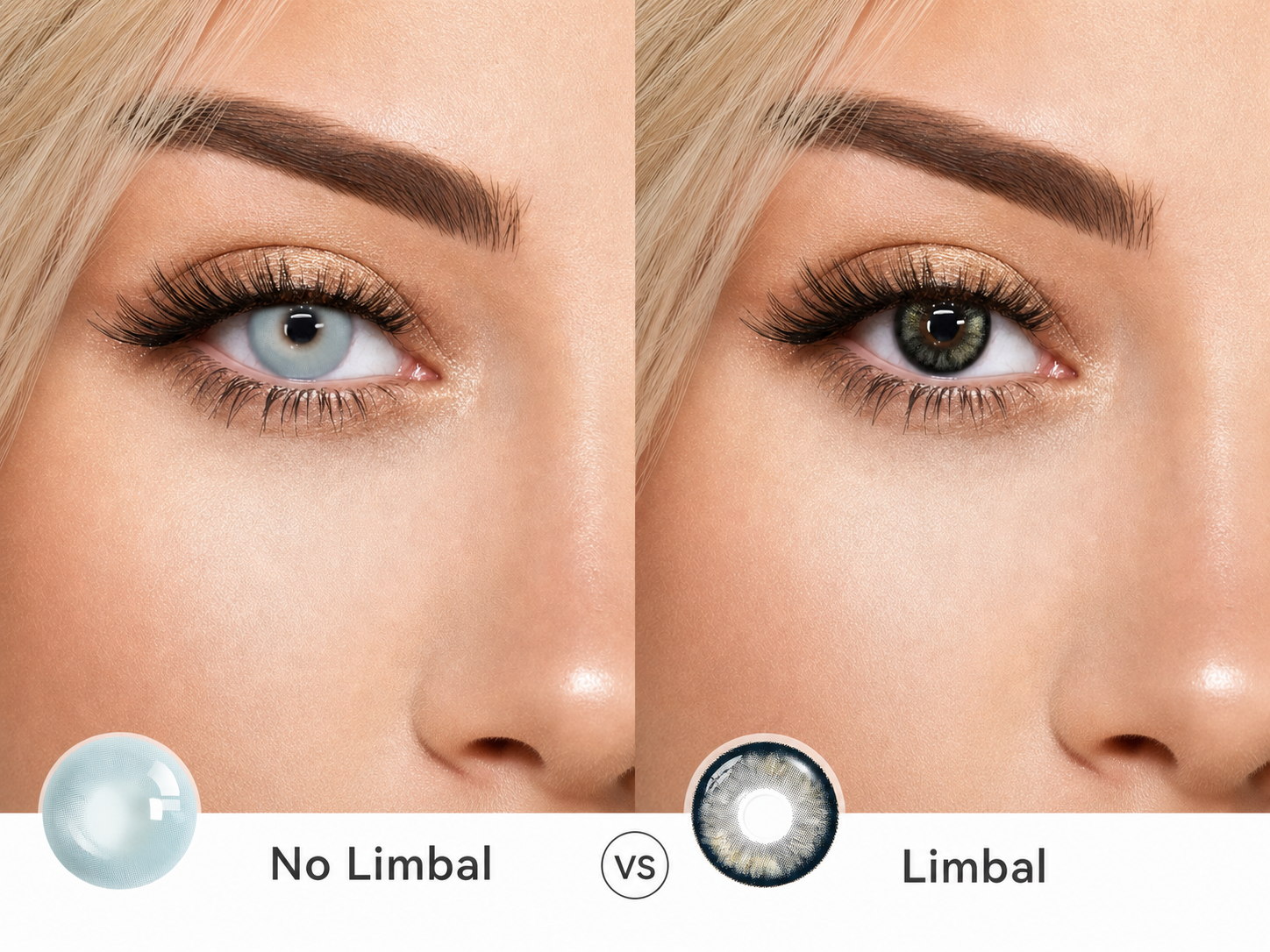
A well-designed limbal ring — the dark, graduated edge at the lens boundary — adds depth and definition that mimics the natural iris. This often makes the difference between a lens that looks integrated and one that looks obviously placed.
Material and Water Content
Think about how you actually wear colored contacts before focusing on specs. Most people use them for a few hours at a stretch — for outings, content creation, or events — rather than full-day extended wear. For shorter or occasional use, the material choice matters less. For regular all-day wear, oxygen permeability becomes a real comfort factor, and a higher-permeability lens will feel noticeably better throughout extended hours.
Water content is where many people get it wrong: higher is not better. Lenses with very high water content may feel comfortable at first, but they can actually draw moisture from the eye surface over time — especially in dry, air-conditioned, or screen-heavy environments. The result is often increased dryness in the second half of the wearing period, precisely when you need comfort most.
The recognized sweet spot for everyday wearable comfort lies roughly between 38% and 42%. Lenses in this range maintain enough softness and hydration without becoming a net drain on your natural tear film. EYEVOS lenses fall within this optimal window, which explains their consistent comfort reports from wearers in drier climates or office settings.
Prescription
Required by law — not optional. The FDA's classification exists because a base curve or diameter mismatch can cause real corneal damage over time. A legitimate retailer will require a valid prescription before sale.
Color Performance on Dark Eyes
|
Color Category |
Example Shades |
Effect on Dark Eyes |
Best Setting |
|
Honey / Hazel |
Honey, Hazel, Chocolate Brown |
Warm amber glow, high blend |
Daily, natural light |
|
Olive / Forest Green |
Olive Green, Forest Green |
Deep, dimensional, natural |
Daily, warm-toned looks |
|
Gray / Taupe |
Smoky Gray, Taupe |
Cool, sophisticated, moody |
Daily, cool-toned looks |
|
Deep Blue / Violet |
Sapphire Blue, Violet |
High contrast, striking |
Photography, events |
|
Dark Brown Enlarging |
Dark Brown, Mood Brown |
Natural enlargement, warm depth |
Daily, any occasion |
Safety and Care
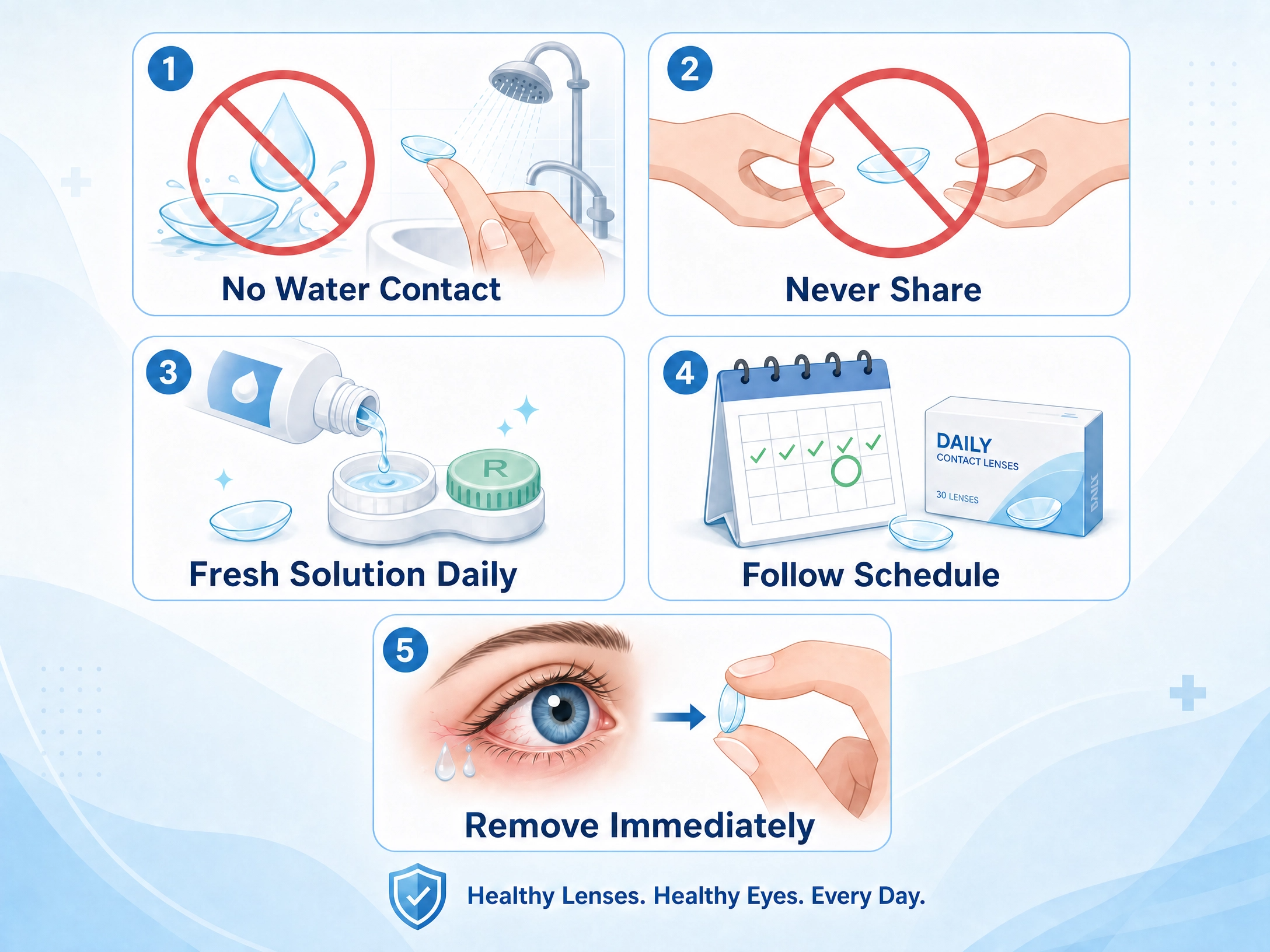
- Avoid direct water contact with your lenses. The CDC identifies water exposure as a primary transmission route for Acanthamoeba — a microorganism that can cause severe, vision-threatening corneal infection. Remove lenses before swimming, showering, or washing your face.
- Never share lenses. Sharing is a direct route for bacterial and microbial infection, regardless of how clean the lenses appear.
- Use fresh solution every time. Empty the lens case, rinse it, then refill with fresh multipurpose solution. Topping off the old solution allows biofilm to accumulate, reducing disinfectant effectiveness.
- Follow replacement schedules strictly. Dailies are one-day lenses. Monthlies are one-month lenses. Extending wear beyond the specified period permits protein and microbial buildup regardless of how the lenses appear to be holding up.
- Remove lenses immediately if you experience: burning, stinging, significant redness, blurred vision, light sensitivity, discharge, or difficulty removing a lens. These are not normal discomfort symptoms — seek professional eye care promptly.
Frequently Asked Questions
Do colored contacts actually show up on brown eyes?
Yes — but only with opaque or high-coverage lenses. Enhancement tints show little to no color change on dark irises. Opaque lenses project color regardless of the underlying iris's darkness.
Do I need a prescription even if my vision is perfect?
Yes. The FDA classifies all contact lenses — including non-corrective colored lenses — as Class II medical devices needing a valid prescription. This is a legal requirement, not a formality.
What colors look most natural on brown eyes?
Honey, hazel, warm olive green, and amber. Their warm tonal family aligns naturally with a brown iris, blending rather than contrasting.
What's the difference between black and dark brown enlarging contacts?
Brown creates a softer, warmer enlargement that integrates naturally in everyday settings. Black creates a stronger contrast — effective in photography and styled looks, but can feel heavier in ordinary daily settings.
Why do my colored contacts feel uncomfortable?
Most common causes: insufficient oxygen permeability, base curve mismatch, extended wear time, or incomplete cleaning. Persistent discomfort means remove the lenses and consult an eye care professional.
Can I sleep in colored contacts?
No. Sleeping in contact lenses significantly increases the risk of corneal hypoxia and infection. Remove before sleep, without exception.
Do gray contacts look good on brown eyes?
Yes, when chosen thoughtfully. A softer gray with a well-designed limbal ring creates a sophisticated, dimensional effect without looking flat or washed out.
Will contacts look different in photos than in real life?
Almost always. Lenses appear more vivid on camera, especially beneath controlled lighting. Bold colors will photograph with considerably more intensity than they appear in everyday settings.
Learn More
- How to Put In Colored Contacts for Beginners
- The Best Doll Makeup Looks for 2026: 6 Dolly Lenses & How to Wear Them
- Where to Buy Colored Contacts Safely? Are AliExpress and Shein Colored Contacts Worth the Risk?
- What Colored Contacts Should You Wear for Ariana Grande Concert Makeup?
- First Time Wearing Colored Contacts? How to Put Them In Easily and Safety
- Why Do Some Colored Contacts Feel Like Nothing? The Secret to Ultra-Comfortable Lenses
- Can I Wear Colored Contacts All Day? What 8+ Hours Actually Feels Like
- What If You Were Invited to the Wedding of the Century? A Guide to Guest-Worthy Eyes
- Do Colored Contacts Show Up on Dark Eyes? Here's What to Look For
References
- U.S. Food and Drug Administration (FDA): Colored Contact Lenses
- Centers for Disease Control and Prevention (CDC): Contact Lens Health
- American Academy of Ophthalmology (AAO): Decorative Contact Lenses
Disclaimer
This article is for informative purposes only and does not constitute medical advice. Please consult a qualified eye care professional before purchasing or using any contact lenses.
Comment