Can I Wear Colored Contacts With Glasses? A Simple Guide for Beginners
Jul 14,2026 | EYEVOS
Can I Wear Colored Contacts With Glasses? A Simple Guide for Beginners
Short Answer
Yes, you can wear colored contacts with glasses in some situations.
If your colored contacts are Plano, also shown as 0.00 or non-prescription, they can change your eye color while your prescription glasses correct your vision. If your colored contacts already have prescription power, you should usually pair them only with non-prescription glasses, sunglasses, or fashion frames.
What you should not do is layer colored contacts over regular contact lenses. Wearing two contact lenses in the same eye is not a safe shortcut. Your eyes need oxygen, proper lens movement, and a correctly fitting lens.
Colored contacts may be beautiful, but they still sit directly on your eyes. A gentle look starts with clear information, proper fit, and safe habits.

Can You Wear Colored Contacts With Glasses?
Yes, you can wear colored contacts with glasses, but the right combination depends on whether your contacts and glasses have prescription power.
Here is the simplest way to understand it:
|
Colored contacts |
Glasses |
Is it okay? |
What it means |
|
Plano / 0.00 colored contacts |
Prescription glasses |
Usually yes |
Contacts change eye color; glasses correct vision |
|
Prescription colored contacts |
Non-prescription glasses |
Usually yes |
Contacts correct vision; glasses are for style or sun protection |
|
Prescription colored contacts |
Prescription glasses |
Usually not recommended |
You may overcorrect your vision and feel blurry, dizzy, or strained |
|
Colored contacts |
Regular clear contact lenses |
No |
Never stack two contact lenses on one eye |
If you already wear glasses and only want a subtle color change, plano-colored contacts with your regular glasses may seem like the easiest option. Still, Plano does not mean “no eye-care rules.” Even non-prescription colored contacts need proper fit, clean handling, and responsible wear.
What Does Plano Mean for Colored Contacts?
Plano means the contact lens has no vision-correcting power.
You may also see it written as:
- 0.00
- Power-free
- No power
- Non-prescription
- Cosmetic only
Plano colored contacts can change the appearance of your eye color, but they do not correct nearsightedness, farsightedness, or astigmatism.
For example, if you normally need glasses to see clearly, Plano colored contacts will not replace your glasses. You would still need your prescription glasses for clear vision.
One important note: Plano does not mean the lens is just a beauty accessory. In the United States, the FDA states that all contact lenses, including decorative or non-corrective lenses, are medical devices and require proper prescription-based dispensing. (fda.gov)
Do Colored Contacts Have Prescription Power?
Yes, some colored contacts have prescription power, and some do not.
Prescription colored contacts can correct your vision while also changing your eye color. Depending on the brand and product, they are available in prescriptions for nearsightedness, such as -1.00, -2.50, or -5.00.
But contact lens prescriptions are not always the same as glasses prescriptions. Contact lenses sit directly on the eye, so the prescription may also include fit-related details such as:
- Power
- Base curve
- Diameter
- Lens material
- Replacement cycle
- Brand or lens type
- Cylinder and axis, if you have astigmatism
If you only know your glasses prescription, do not simply guess your contact lens power. An eye care professional can help confirm what your eyes actually need.
Can I Wear Non-Prescription Colored Contacts With Prescription Glasses?
Yes, you can usually wear non-prescription colored contacts with prescription glasses if the lenses are properly fitted and comfortable.
This is a common option for people who love their glasses but still want to try a new eye color. In this pairing:
- The colored contacts create the visual color effect.
- Your glasses provide the vision correction.
- You do not need the colored contacts to correct your eyesight.
This can be a gentle first step for beginners who are curious about colored contacts but not ready to fully switch from glasses.
For example, you might wear Plano brown lenses with your everyday prescription glasses for a softer look, or gray lenses with a clean metal frame for a cooler tone. The goal is not to replace your glasses. It is simple to create another layer of personal style.
Can I Wear Prescription Colored Contacts With Glasses?
You can wear prescription-colored contacts only with non-prescription glasses.
For example, these combinations are generally reasonable:
- Prescription colored contacts + sunglasses
- Prescription colored contacts + blue-light frames with no power
- Prescription colored contacts + fashion glasses with clear Plano lenses
But wearing prescription colored contacts with prescription glasses is usually not recommended unless your eye care professional specifically tells you to do so.
If both your contacts and glasses correct the same vision problem, your eyes may receive too much correction. This can make your vision feel:
- Blurry
- Distorted
- Too sharp or uncomfortable
- Dizzy
- Tiring
- Headache-prone
If you put on colored contacts and your glasses together and something feels off, do not push through it. Take a break and confirm whether both products are powered on.
Can I Wear Colored Contacts Over Regular Contacts?
No. You should not wear colored contacts over regular contact lenses.
This is one of the most important rules for beginners.
If you need vision correction and color, do not place Plano colored contacts on top of your clear prescription contacts. Wearing two lenses on one eye can:
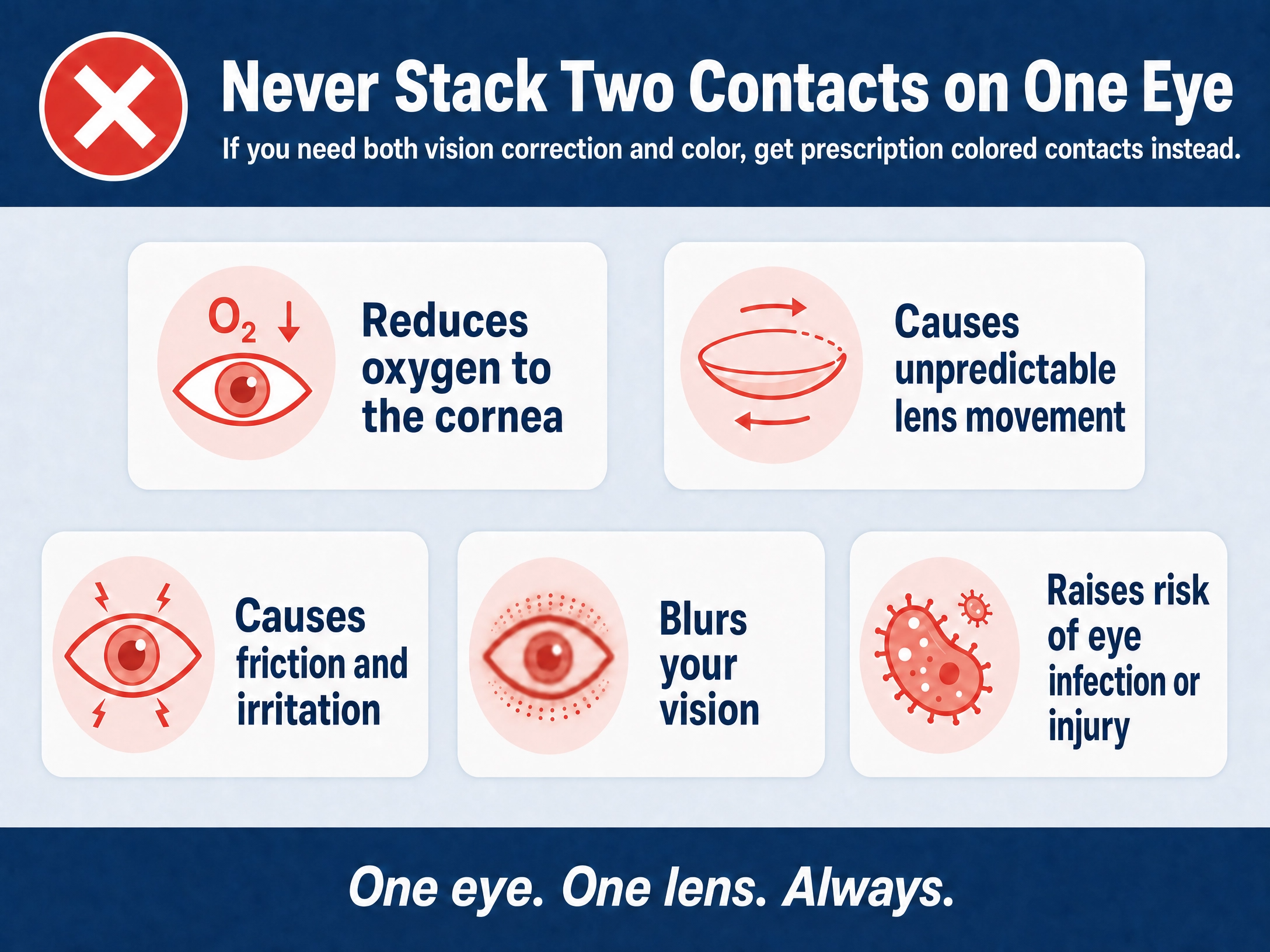
- Reduce oxygen flow to the cornea
- Make the lenses move unpredictably
- Cause rubbing or irritation
- Blur your vision
- Increase the risk of eye infection or injury
A colored lens is not a makeup sticker. It is a medical device that needs to sit directly and correctly on your eye.
If you need both color and vision correction, ask an eye care professional about prescription colored contacts that fit your eyes. Do not stack lenses.
Do I Need a Prescription for Colored Contacts If I Already Wear Glasses?
In the United States, yes. Colored contacts require a valid contact lens prescription, even if they are Plano.
This may feel surprising if you only want them for color, but the reason is simple: contact lenses come into contact with your eyes. A prescription is not only about power. It also helps confirm whether the lens can fit your eye safely.
An eye care professional may check:
- Your vision needs
- Your corneal shape
- Base curve
- Diameter
- Tear film and dryness
- How the lens moves on your eye
- Whether your eyes tolerate contact lens wear
The FDA advises that an eye doctor should measure each eye to properly fit lenses and evaluate how your eyes respond to contact lens wear. (fda.gov)
This is especially important for beginners. A lens that looks beautiful online may still feel wrong if it doesn't fit your eyes.
What If I Have Astigmatism?
If you have astigmatism, you may need toric contact lenses instead of regular spherical lenses.
Astigmatism can cause vision to be blurry or distorted if it is not properly corrected. Some people with astigmatism can wear standard soft lenses for certain needs, but others need toric lenses with cylinder and axis values.
If you want colored contacts and you have astigmatism, do not choose based on color alone. Look for a brand or lens option that clearly explains:
- Whether toric colored contacts are available
- What prescription ranges are offered
- Whether the cylinder and axis can be selected
- Base curve and diameter
- Replacement cycle
- Material and care instructions
Most importantly, speak with your eye care professional before buying.
EYEVOS currently does not offer toric astigmatism lenses. If you have astigmatism and need vision correction through contact lenses, choose a transparent, properly fitted option that protects your eyes first. Color is beautiful, but clear vision and comfort should come before the shade.
Are Daily or Monthly Colored Contacts Better for Beginners?
For many beginners who only want colored contacts occasionally, daily lenses may be simpler. Monthly lenses can also work well, but they require more careful cleaning and storage.
Here is a soft comparison:
|
Lens type |
Best for |
Beginner note |
|
Daily colored contacts |
Occasional wear, events, photos, travel, Halloween, cosplay |
Use once, then throw away. Do not reuse daily lenses. |
|
Monthly colored contacts |
More regular wear |
Must be cleaned, disinfected, stored correctly, and replaced on schedule. |
If you only plan to wear colored contacts once or twice a week, daily lenses may feel easier because there is no lens case routine and no overnight storage. If you choose monthly lenses, remember that “monthly” usually means the replacement cycle starts after opening, not after 30 separate wears.
CDC guidance emphasizes using fresh contact lens solution for storage and avoiding using water for contact lens storage. (cdc.gov)
Beginner Checklist Before Wearing Colored Contacts With Glasses
Before wearing colored contacts with glasses, pause for a soft little eye check.
Ask yourself:
- Are my colored contacts Plano or prescription?
- Are my glasses prescription or non-prescription?
- Am I accidentally doubling my vision correction?
- Do I have a valid contact lens prescription?
- Do I know the lens base curve and diameter?
- Is the lens daily, monthly, or another replacement type?
- Do I know how long I can wear it?
- Do I have the right contact lens solution if the lens is reusable?
- Are my hands clean and dry?
- Is the lens clean, moist, and not torn?
- Is the lens facing the right way?
- Do my eyes feel calm after insertion?
If something feels painful, sharp, very blurry, or unusually uncomfortable, take the lenses out.
Your eyes do not need to “earn” beauty by enduring discomfort.
How Long Should Beginners Wear Colored Contacts?
Beginners should start slowly and avoid wearing colored contacts for a full day right away.
If this is your first time wearing contact lenses, give your eyes and your hands time to learn. Many beginners need practice inserting and removing lenses. That is normal.
A gentle beginner approach may look like this:
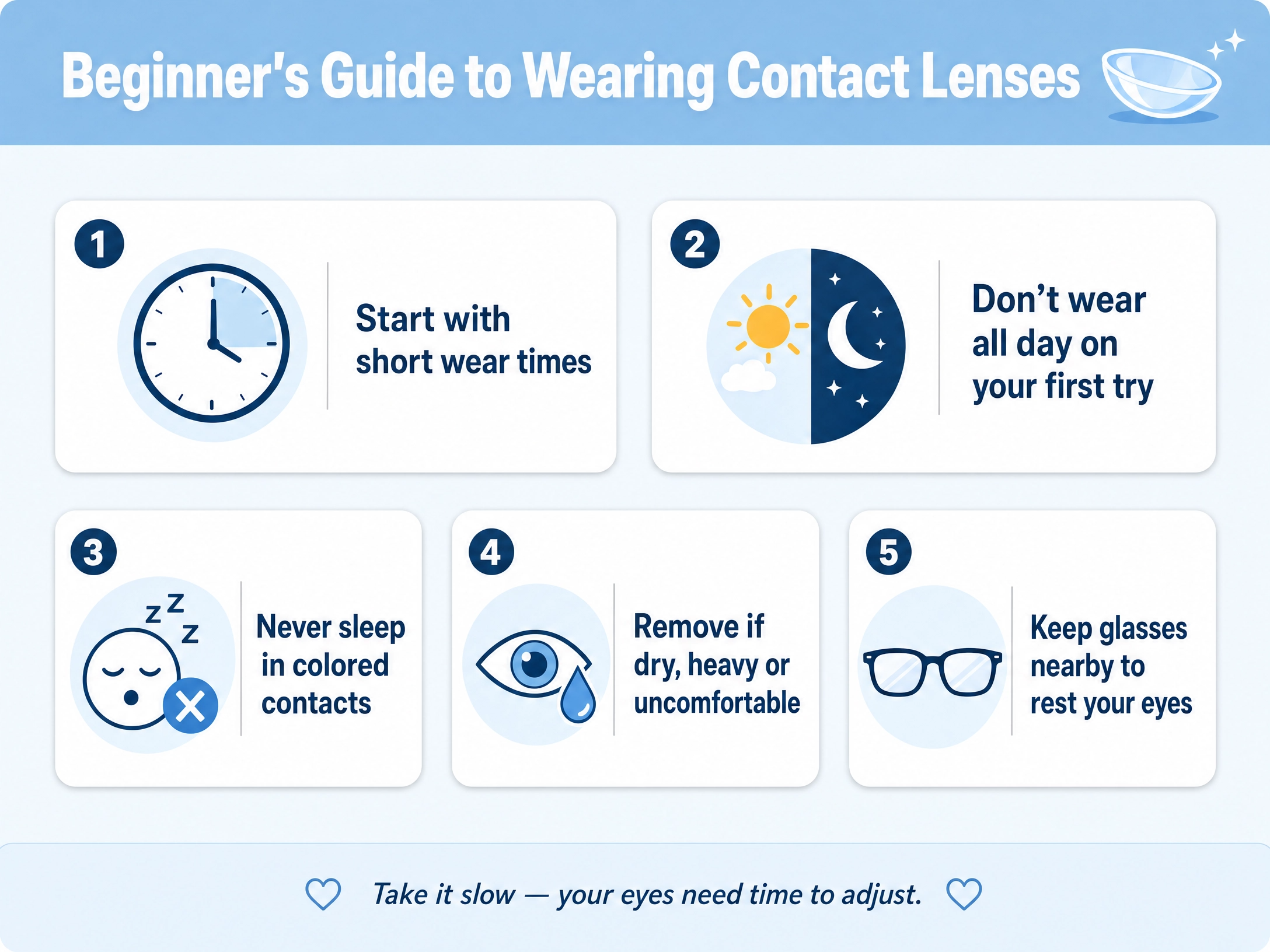
- Start with a short wear time.
- Avoid wearing lenses from morning to night on your first try.
- Do not nap or sleep in colored contacts unless specifically prescribed for overnight wear.
- Take them out if they feel dry, heavy, or uncomfortable.
- Keep your glasses nearby so your eyes can rest.
CDC contact lens tips advise not sleeping in contacts unless prescribed by an eye doctor and replacing lenses as recommended. (cdc.gov)
Why Do Colored Contacts Feel Blurry, Burning, or Uncomfortable?
Colored contacts can feel blurry, burning, or uncomfortable for several reasons.
Possible causes include:
- The lens is inside out.
- The lens is dry.
- There is makeup, lint, or debris on the lens.
- The lens is damaged.
- The fit is not right for your eye.
- The power is wrong.
- Astigmatism is not being corrected.
- Your eyes are dry or sensitive.
- You have worn the lenses too long.
- The lens has touched water or an unclean surface.
A little awareness may happen when you are new to contacts. But pain, strong burning, redness, light sensitivity, discharge, or vision changes are not something to ignore.
Remove the lenses and rest your eyes. If symptoms continue, contact an eye care professional.
Can I Use Contact Lens Solution as Eye Drops?
No, contact lens solution is not the same as eye drops.
A multipurpose contact lens solution is designed to clean, disinfect, rinse, and store contact lenses according to the product instructions. It is not meant to be used directly in your eyes as a comfort drop.
If your eyes feel dry while wearing contacts, ask your eye care professional which rewetting drops are suitable for contact lens wear.
Also, never use water, saliva, or old solution to wet or store your lenses. CDC guidance specifically warns contact lens wearers to keep water away from their lenses and to remove their lenses before water activities such as swimming or showering. (cdc.gov)
When Should You Stop Wearing Colored Contacts and Ask an Eye Care Professional?
Stop wearing colored contacts and ask an eye care professional if you notice:
- Eye pain
- Strong burning
- Significant redness
- Swelling
- Light sensitivity
- Discharge
- Blurry vision that does not clear
- A torn or scratched lens
- A lens that feels stuck
- Symptoms that continue after removing the lens
Do not keep wearing lenses to see if your eyes “get used to it.” Your eyes are already giving you information. Listen early.
How to Style Colored Contacts With Glasses: EYEVOS Color Series Guide
Colored contacts do not have to replace your glasses. They can become a soft styling layer, like choosing a lip tint, a scarf, or a frame shape that changes the mood of your day.
At EYEVOS, we believe colored contacts should feel clear, gentle, and intentional. The best color is not always the most dramatic one. It is the one that fits your natural eye color, your makeup rhythm, your glasses, and the way you want to feel.
Here are a few gentle ways to explore EYEVOS color families.
Brown Series: Soft, Natural, Everyday
Brown colored contacts are ideal if you want a subtle change that still feels close to your natural eyes.
They are especially suitable for:
- Beginners
- Dark brown or black natural eyes
- Everyday makeup
- School or work looks
- Warm-toned glasses
- Users who want a softer, more approachable gaze
Brown lenses pair beautifully with tortoiseshell frames, champagne metal frames, soft beige makeup, and clean daily styling.
If you wear glasses every day and want your first colored contacts to feel effortless, brown is often the calmest place to start.
Gray Series: Clear, Cool, Modern
Gray-colored contacts create a cooler, more defined eye look.
They may suit people who like:
- Clean makeup
- Cool-toned outfits
- Silver, black, or transparent frames
- A more polished look
- Slightly sharper eye definition
- Minimalist or city-style aesthetics
Gray can feel more noticeable than brown, especially on dark eyes. If your style leans crisp, clean, or quietly dramatic, gray may give your glasses a fresh edge.
Green Series: Fresh, Soft, Distinctive
Green colored contacts can add a fresh, botanical softness to your eyes.
They may suit:
- Users who want something different but not too bold
- Warm or neutral makeup
- Brown, gold, olive, or cream clothing
- Soft glam looks
- People who enjoy a natural but memorable color shift
Green lenses can look especially pretty with gold frames, brown mascara, peach blush, and earth-toned styling.
Hazel Series: Warm, Dimensional, Sunlit
Hazel colored contacts are a gentle middle ground between brown, amber, and green.
They may be suitable for:
- People who want warmth without going too light
- Dark brown eyes that need visible dimension
- Golden-hour makeup
- Soft glam or romantic looks
- Brown, gold, nude, or rose-toned frames
Hazel can be a lovely choice if you want your eyes to look brighter while still feeling wearable.
Blue Series: Bright, Cool, Statement
Blue colored contacts are usually more noticeable, especially on naturally dark eyes.
They may suit:
- Photo shoots
- Creative makeup
- Cosplay-inspired looks
- Party styling
- Cool-toned outfits
- Users who want a clear color transformation
If you are new to colored contacts, blue may feel more dramatic than brown or hazel. Try it when you want your eye color to be part of the look, not just a quiet detail.
Black or Enlargement Styles: Defined, Doll-Like, Expressive
Black or enlarging styles can make the eyes look more defined.
They may suit:
- Doll-like makeup
- Anime-inspired looks
- Cosplay
- Stage or photo styling
- Users who want a rounder, more expressive eye effect
For everyday wear, choose carefully. Very large graphic diameters may feel visually heavier and may not suit every eye shape or comfort level. Beginners should pay attention to lens diameter, graphic diameter, and how the lens feels after insertion.
How to Choose an EYEVOS Color If You Wear Glasses
If you wear glasses, your frame color and lens color work together.
Try thinking in small pairings:
- Black frames + gray lenses: clean, sharp, modern
- Gold frames + hazel lenses: warm, soft, elegant
- Tortoiseshell frames + brown lenses: natural, classic, daily
- Transparent frames + green lenses: fresh, light, airy
- Silver frames + blue lenses: cool, bright, expressive
If you are a beginner, start with a color that feels like a softer version of yourself. You can always explore more expressive shades later.
Beauty does not need to be rushed. Your eyes deserve both color and care.
Final Takeaway
You can wear colored contacts with glasses, but the safest choice depends on what each product is doing.
Plano colored contacts can usually be paired with prescription glasses because the contacts change color while the glasses correct vision. Prescription colored contacts can usually be paired with non-prescription glasses or sunglasses. But you should not wear prescription contacts with prescription glasses unless your eye care professional has specifically advised you to do so.
Most importantly, never layer colored contacts over regular contact lenses.
For beginners, the best first step is not choosing the boldest color. It is understanding your power, fit, replacement cycle, and care routine. Once those details are clear, colored contacts can become a soft, expressive part of your beauty ritual.
FAQ
Can I wear colored contacts with glasses?
Yes, you can wear colored contacts with glasses in some situations. Plano colored contacts can usually be worn with prescription glasses, while prescription colored contacts should usually be paired with non-prescription glasses or sunglasses.
Can I wear non-prescription colored contacts with prescription glasses?
Yes. Non-prescription colored contacts can change your eye color while your prescription glasses correct your vision, as long as the contacts fit properly and are worn safely.
Can I wear prescription colored contacts with prescription glasses?
Usually no. Wearing prescription colored contacts with prescription glasses may overcorrect your vision and cause blur, strain, dizziness, or headaches unless your eye care professional specifically recommends it.
Can I wear colored contacts over regular contacts?
No. Do not layer colored contacts over regular contact lenses. Wearing two lenses on one eye can reduce oxygen flow, affect fit, and increase the risk of irritation or infection.
What does Plano mean in colored contacts?
Plano means the lens has no vision-correcting power. It may also appear as 0.00, power-free, or non-prescription.
Do colored contacts have power?
Some colored contacts have prescription power, and some are Plano. If you need vision correction, ask an eye care professional for a contact lens prescription rather than guessing from your glasses prescription.
Do I need a prescription for colored contacts if they are 0.00?
In the United States, yes. The FDA states that all contact lenses, including decorative or non-corrective lenses, are medical devices and require proper prescription-based dispensing.
Can I wear colored contacts if I have astigmatism?
If you have astigmatism, you may need toric contact lenses. Choose information-transparent brands or lens options that clearly explain whether toric powers, cylinder, and axis are available, and consult your eye care professional.
Are daily colored contacts better for beginners?
Daily colored contacts may be easier for beginners who only wear lenses occasionally because they are single-use and do not require cleaning or storage. Do not reuse daily lenses.
Can I reuse daily colored contacts?
No. Daily contact lenses are designed for single use and should be discarded after wearing.
Why do colored contacts make my eyes burn?
Burning may happen if the lens is inside out, dry, dirty, damaged, poorly fitted, or if your eyes are sensitive. Remove the lenses if burning is strong or does not quickly improve.
Can I sleep in colored contacts?
Do not sleep in colored contacts unless your eye care professional has specifically prescribed them for overnight wear. Sleeping in lenses can increase the risk of eye infection.
Learn More
- How to Put In Colored Contacts for Beginners
- The Best Doll Makeup Looks for 2026: 6 Dolly Lenses & How to Wear Them
- Where to Buy Colored Contacts Safely? Are AliExpress and Shein Colored Contacts Worth the Risk?
- What Colored Contacts Should You Wear for Ariana Grande Concert Makeup?
- First Time Wearing Colored Contacts? How to Put Them In Easily and Safety
- Why Do Some Colored Contacts Feel Like Nothing? The Secret to Ultra-Comfortable Lenses
- Can I Wear Colored Contacts All Day? What 8+ Hours Actually Feels Like
- What If You Were Invited to the Wedding of the Century? A Guide to Guest-Worthy Eyes
- Do Colored Contacts Show Up on Dark Eyes? Here's What to Look For
- What Color Contacts Are Best for Brown Eyes? A Guide for Natural and Bold Looks
- Can I Sleep With Colored Contacts? Why You Should Think Twice
- The 2026 EYEVOS Summer Makeup Contest: We Asked 30 Artists What Summer Looks Like —— They Painted the Answer on Their Faces.
References
- U.S. Food & Drug Administration. Decorative, Non-corrective Contact Lenses: Guidance for Industry, FDA Staff, Eye Care Professionals, and Consumers.
- U.S. Food & Drug Administration. Types of Contact Lenses.
- U.S. Food & Drug Administration. Colored and Decorative Contact Lenses: A Prescription Is A Must.
- Centers for Disease Control and Prevention. Healthy Habits: Keeping Water Away from Contact Lenses.
-
Centers for Disease Control and Prevention. Preventing Eye Infections When Wearing Contacts.
- Centers for Disease Control and Prevention. About Cleaning, Disinfecting, and Storing Contact Lenses.
-
Centers for Disease Control and Prevention. Contact Lens Tips.
-
American Optometric Association. Patients Beware: Buying Decorative Halloween Contact Lenses without a Prescription is Risky.
Disclaimer
This article is for educational purposes only and does not replace medical advice, diagnosis, or treatment from an eye care professional. Contact lenses are medical devices. If you experience eye pain, redness, swelling, discharge, light sensitivity, blurred vision, or discomfort that persists after removing your lenses, stop wearing them and contact an eye care professional.
Comment