

Aug 17,2026 · EYEVOS
Can You Reuse Colored Contacts? It Depends on the Lens Type
May 12,2026 | EYEVOS
Your first pair of colored contacts just arrived. You're excited to see the transformation — until you stand in front of the mirror, lens balanced on your fingertip, and suddenly your eyelids refuse to cooperate. You blink. You flinch. The lens ends up on your cheek. Twenty minutes later, you're frustrated, your eyes are red, and you're wondering if you made a mistake.
You didn't. Every single contact lens wearer — including every ophthalmologist who prescribes them — struggled the first time. Inserting contacts is a learned motor skill, like tying shoelaces or riding a bike. The good news? Most beginners master it within 3–5 attempts when they follow the correct technique.
This beginner-friendly guide walks you through exactly how to put in colored contacts safely and comfortably in 2026, including a 10-step insertion method, correct removal technique, a full troubleshooting section for common problems, safety do's and don'ts, and what to expect during your first week of wear.
By the end of this guide, you'll have the confidence and muscle memory to insert your lenses in under 60 seconds — without fear, pain, or drama.
Gather all your supplies before opening your contact lens packaging. This way, you'll have everything you need within reach.
Pro tip: Insert lenses before applying makeup, and remove them before removing makeup. This prevents cosmetics from contaminating the lens surface.
These four rules help you avoid the most common beginner mistakes. Ignoring them increases your risk of infection, irritation, or lens damage.
Follow these steps in order. Read through all 10 before your first attempt so the sequence feels familiar.
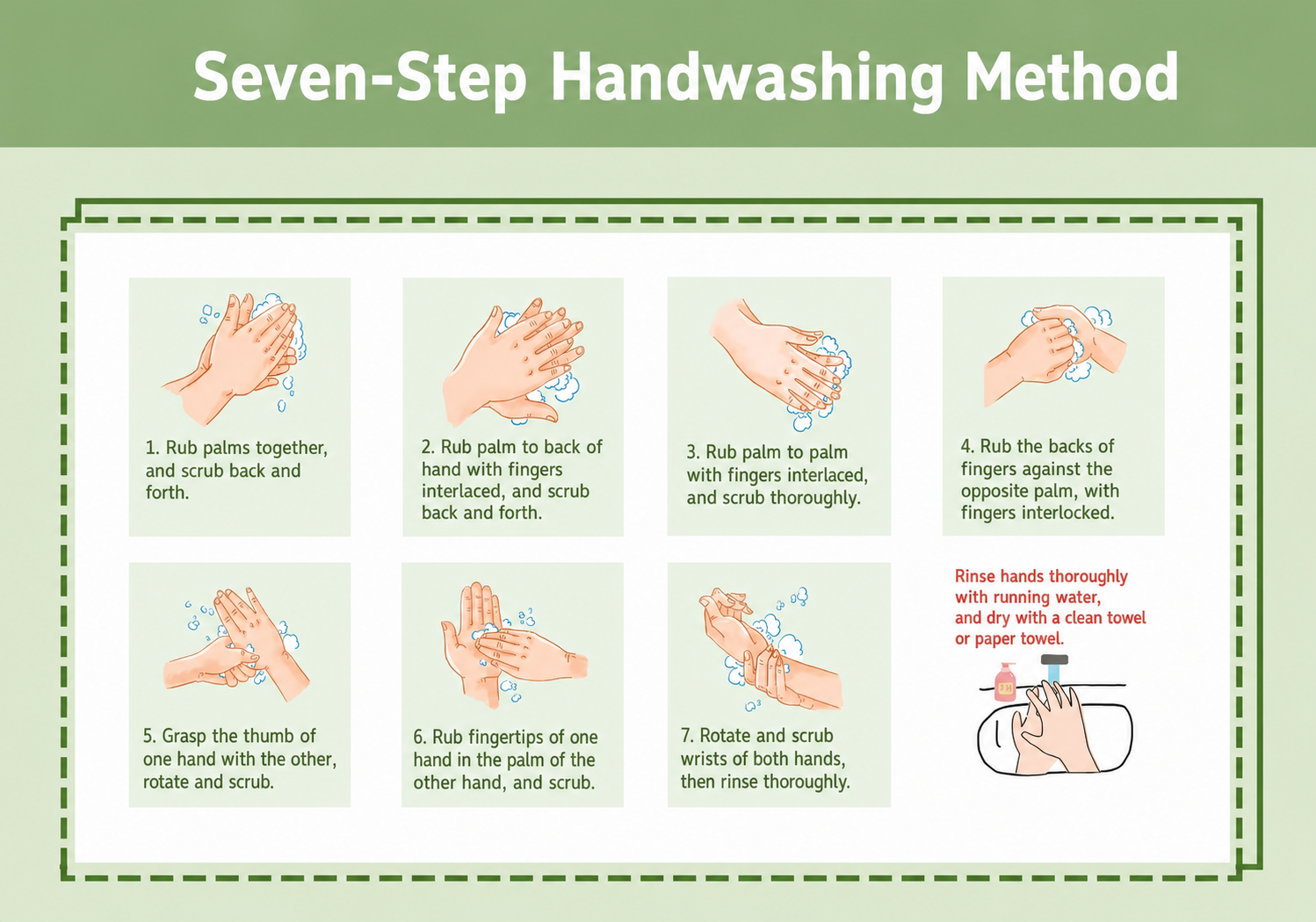
Use lukewarm water and fragrance-free soap. Scrub for at least 20 seconds, paying attention to fingertips and under your nails. Dry completely with a lint-free towel — a damp hand transfers water droplets to the lens.
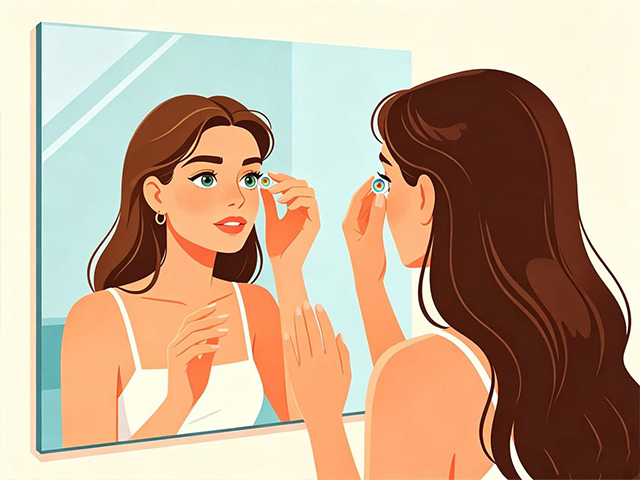
Stand or sit at a well-lit mirror. Place a clean towel on the counter below you — this is your "safety net" if the lens falls. A lens that lands on a clean towel is recoverable; one that lands in the sink usually isn't.
For daily disposables, peel the foil lid back slowly and fully to avoid splashing solution. For reusable lenses, open the case and tip the lens into your palm. Confirm the lens is clean, intact, and free of tears or debris.
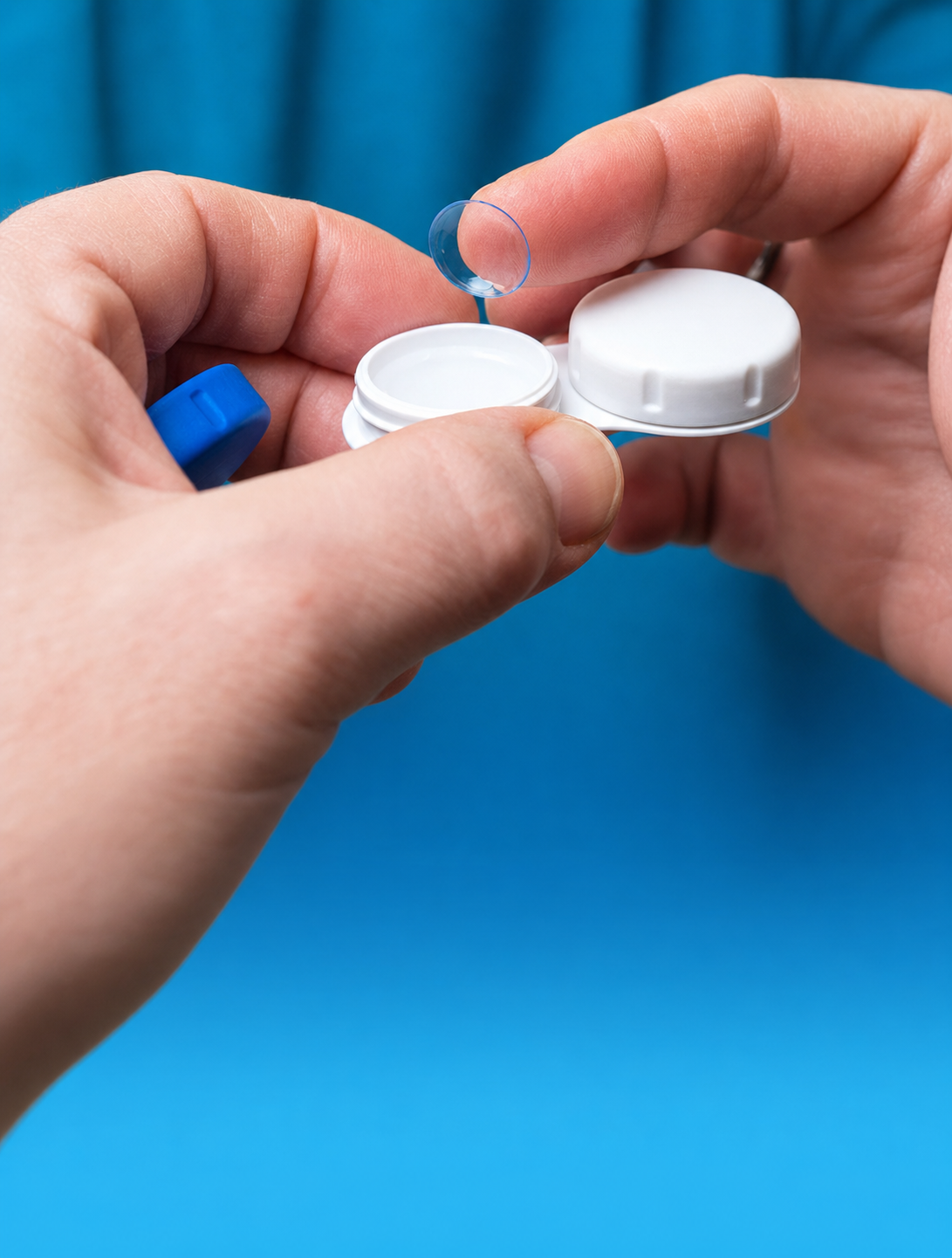
Use your non-dominant hand's index finger to transfer the lens from the case to your dominant hand's index finger. The lens should balance on your fingertip, cup-side up, with no finger oils touching the inner surface.
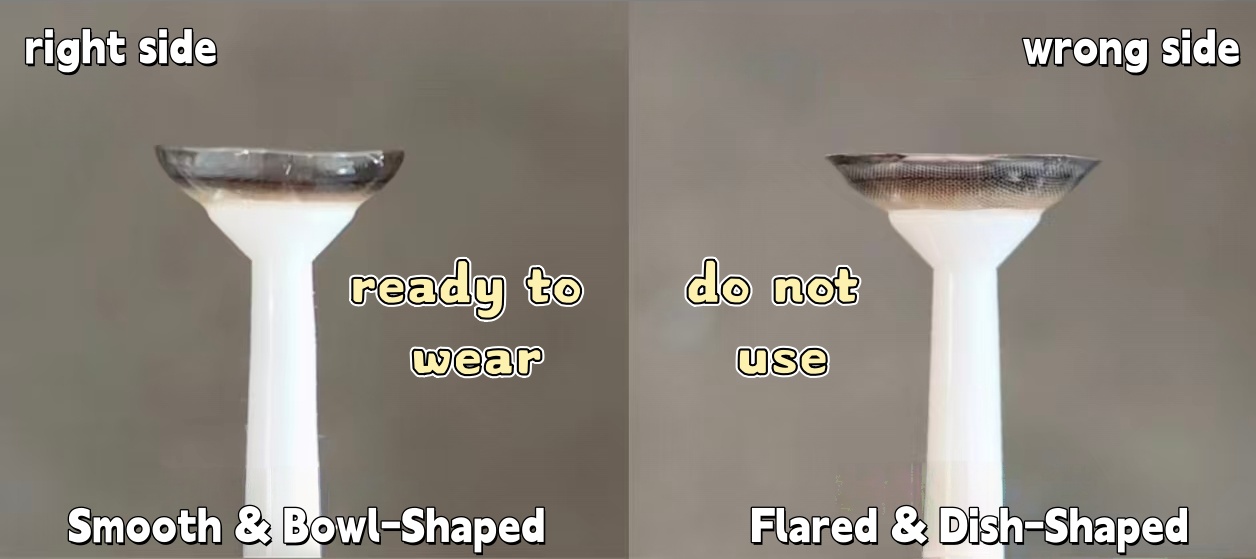
A contact lens is like a tiny bowl — it has a correct side. If it's inverted, it will feel uncomfortable and may not center properly.
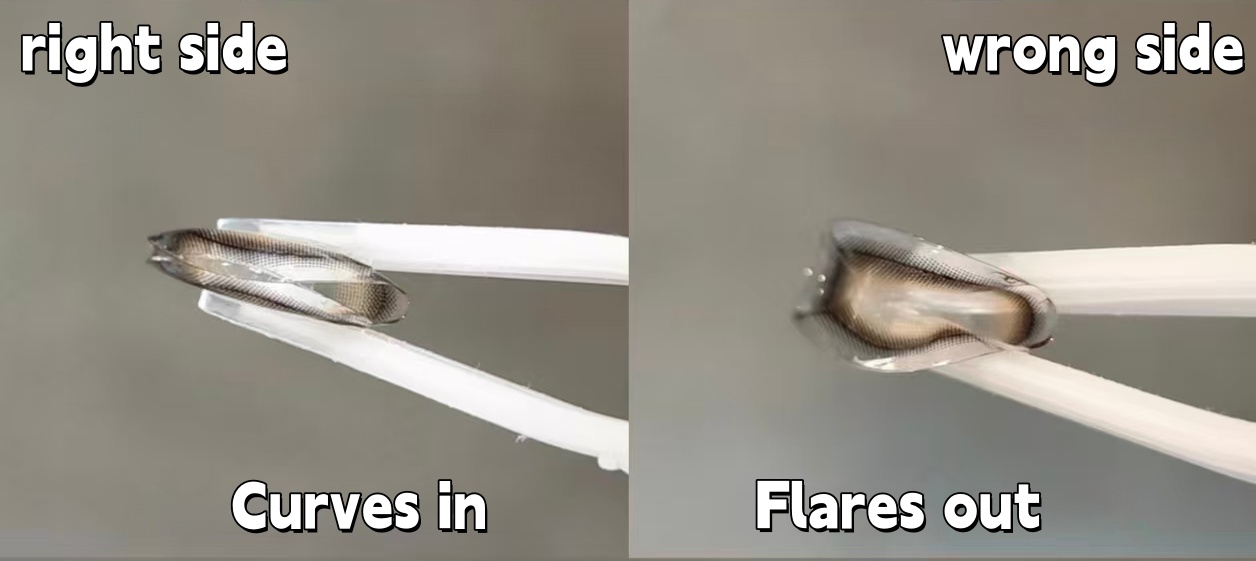
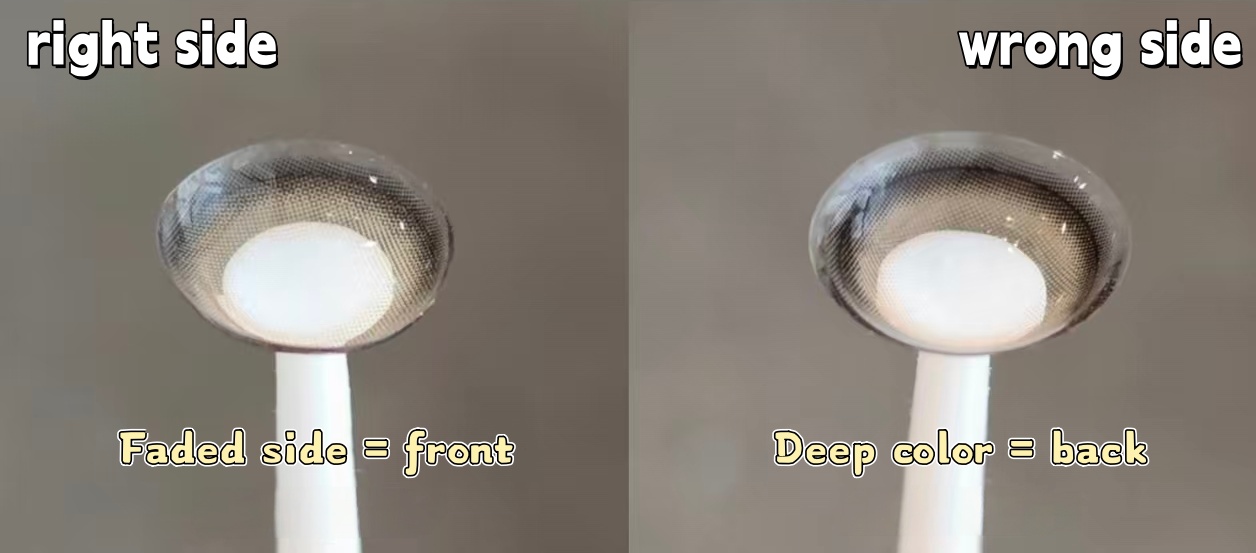
Two ways to check:
Before insertion, check the lens for:
If anything looks off, discard the lens. A damaged lens is never worth the risk to your eye.
This step is difficult for most beginners. Your eyelids naturally want to close to protect your eyes, so you'll need to gently keep them open.
Choose the insertion style that works for you:
Gently release your eyelids one at a time — lower first, then upper.
Close your eyes for 2–3 seconds to let the lens settle, then blink 3–4 times slowly. The lens should self-center. If your vision is immediately clear and your eye feels comfortable, you've done it correctly.
Always use the same eye-first routine every time (e.g., right eye first, always). This prevents mix-ups between prescriptions or color variations.
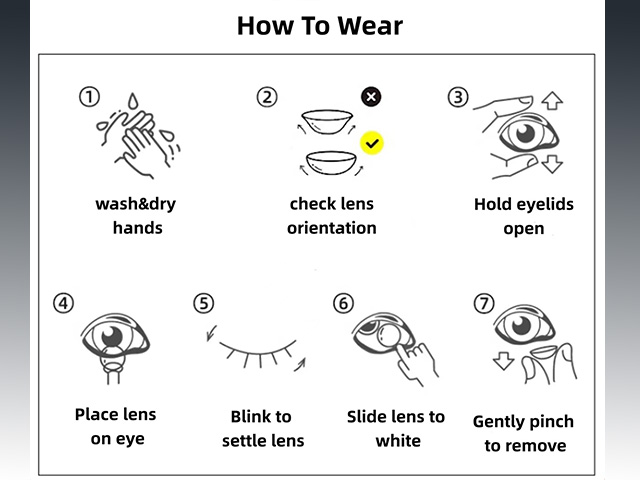
This is the single most common beginner problem — and it causes unnecessary discomfort that makes people think colored contacts "aren't for them."
Balance the lens on your fingertip and look at the profile from the side:
Gently pinch the lens between your thumb and index finger:
The exterior (convex) side of a colored lens has clearly printed, sharp color patterns. The interior (concave) side looks slightly softer and blurred. Always insert with the sharp-color side facing outward.
Insertion isn't the only skill — you need to master removal too. Done incorrectly, removal can scratch your cornea or tear the lens.
Never use your fingernails. Always use fingertip pads. Nail contact with the eye surface can cause corneal abrasions.
Cause: Your finger is too wet or too dry.
Fix: Ensure your finger is completely dry before lifting the lens. If the lens folds, rinse it in contact solution and try again.
Cause: Normal blink reflex.
Fix: Practice holding your eyelids more firmly. Try the "look-up" method so the lens approaches the white of your eye (less reflex-triggering than approaching the cornea). Practicing the eyelid hold without a lens for 2–3 days builds muscle memory.
Cause (in order of likelihood):
Cause: Either the lens is inside-out, decentered, or you've inserted the wrong prescription in the wrong eye.
Fix: Blink 5–6 times to let the lens center. If vision is still blurry after 60 seconds, remove the lens and check orientation + eye assignment.
Cause: Lens has adhered due to dryness (common with reusable lenses).
Fix: Do NOT force it. Apply 2–3 drops of rewetting solution, blink slowly for 30 seconds, then try the slide method. Never pinch a dry lens — it can tear and scratch your cornea.
Cause: The lens has slid under your eyelid (usually upper). It cannot go behind your eye — that's anatomically impossible.
Fix: Look in the opposite direction of where you suspect the lens is. Gently massage your closed eyelid to guide the lens back to the center. Apply rewetting drops. If you can't locate it within 15 minutes or experience pain, consult an eye care professional.
Cause: Normal adjustment response during your first few insertions.
Fix: Keep your eye closed for 30–60 seconds after insertion to allow tears to settle. Watering typically resolves within the first 3–5 wears.
Recommended wear time: 2–4 hours maximum.
Recommended wear time: 4–6 hours.
Recommended wear time: 6–8 hours (build to full daily wear by week 2).
If you still feel discomfort after a week, the issue is likely related to the lens itself (such as fit, material, or brand), not your technique. See an eye care professional for advice.
Most beginner challenges resolve within a week. But you should consult an eye care professional if you experience:
These can indicate corneal abrasion, infection, or an incompatible lens fit — all of which need professional evaluation.
Q1: How long does it take to learn how to insert colored contacts?
Most beginners achieve basic insertion within 3–5 attempts and comfortable 60-second insertion within 5–7 days of daily practice. If you're still struggling after 2 weeks, book a fitting and training session with an optometrist.
Q2: Does inserting colored contacts hurt?
No, properly inserted contact lenses should not hurt. You may feel a brief "awareness" sensation for the first 15–30 minutes as your eye adjusts, but actual pain, burning, or stinging is never normal. If you feel pain, remove the lens immediately.
Q3: Is it harder to insert colored contacts than clear contacts?
Not technically harder, but the insertion method is identical. Colored contacts can actually be easier for beginners because the visible tint makes the lens easier to locate on your fingertip and on your eye.
Q4: Why does my colored contact feel different from a clear contact?
Colored contacts are slightly thicker due to the pigment layer, which some wearers notice initially. Premium sandwich-printed colored lenses feel nearly identical to clear lenses. Budget lenses may feel thicker or have a noticeable "pigment ring."
Q5: Can I insert colored contacts with long or acrylic nails?
Yes, but use the pads of your fingers rather than fingertips, and be extra cautious during insertion and removal. Many wearers with long nails prefer the "slide" removal method to avoid nail contact with the eye.
Q6: What do I do if I drop my colored contact on the floor?
Do not insert it. Even if you rinse it, the lens may carry microorganisms you cannot see. For daily disposables, discard it. For reusable lenses, rinse thoroughly with contact solution, soak for at least 6 hours in fresh solution, and inspect carefully before next use.
Q7: Should I insert lenses before or after makeup?
Always insert lenses before applying makeup, and remove them before removing makeup. This prevents cosmetic particles from contaminating the lens surface and causing irritation.
Q8: Can I practice inserting lenses without actually putting them in my eye?
Absolutely — and it's highly recommended. Practice the eyelid hold and finger placement in front of a mirror without a lens for 2–3 days before your first real insertion. This builds muscle memory with zero risk.
Getting comfortable with colored contacts is more about building confidence than mastering technique. This 10-step guide provides a reliable process, and after a week of practice, what felt challenging at first will soon become second nature.
Remember the essentials: clean hands, proper orientation, firm eyelid hold, and never forcing anything. Follow the do's and don'ts to protect your eyes, and consult a professional if something feels wrong.
With a little practice, you'll be able to enjoy your new look with confidence. Take your time, trust the process, and enjoy the transformation.
Ready for your first pair? Explore our beginner-friendly colored contacts collection — every order includes a free digital fitting consultation and a complimentary insertion & removal training video.
Wear & Care
View more