Do Colored Contacts Block Your Vision? What to Expect Before Wearing Them
Jul 29,2026 | EYEVOS
Do Colored Contacts Block Your Vision? What to Expect Before Wearing Them
Last reviewed: July 28, 2026
Short Answer
Most standard-colored contacts should not block your central vision, since the area over your pupil is usually clear. The color print is typically placed over the iris, while the lens center stays transparent, so you can see.
However, colored contacts can make your vision feel blurry, foggy, dim, shadowed, or partially blocked if the lens shifts, the clear pupil zone is too small for your eyes, your pupils dilate in low light, or the lens does not fit properly.
If your colored contacts cause pain, strong redness, burning, heavy watering, swelling, light sensitivity, or blurry vision that does not clear, remove them and contact an eye care professional. In the United States, decorative contact lenses still require a valid prescription, even if they do not correct vision. The FDA explains that an eye doctor must measure each eye and evaluate how your eyes respond to contact lens wear before prescribing lenses. (fda.gov)
How Do You See Through Colored Contacts?
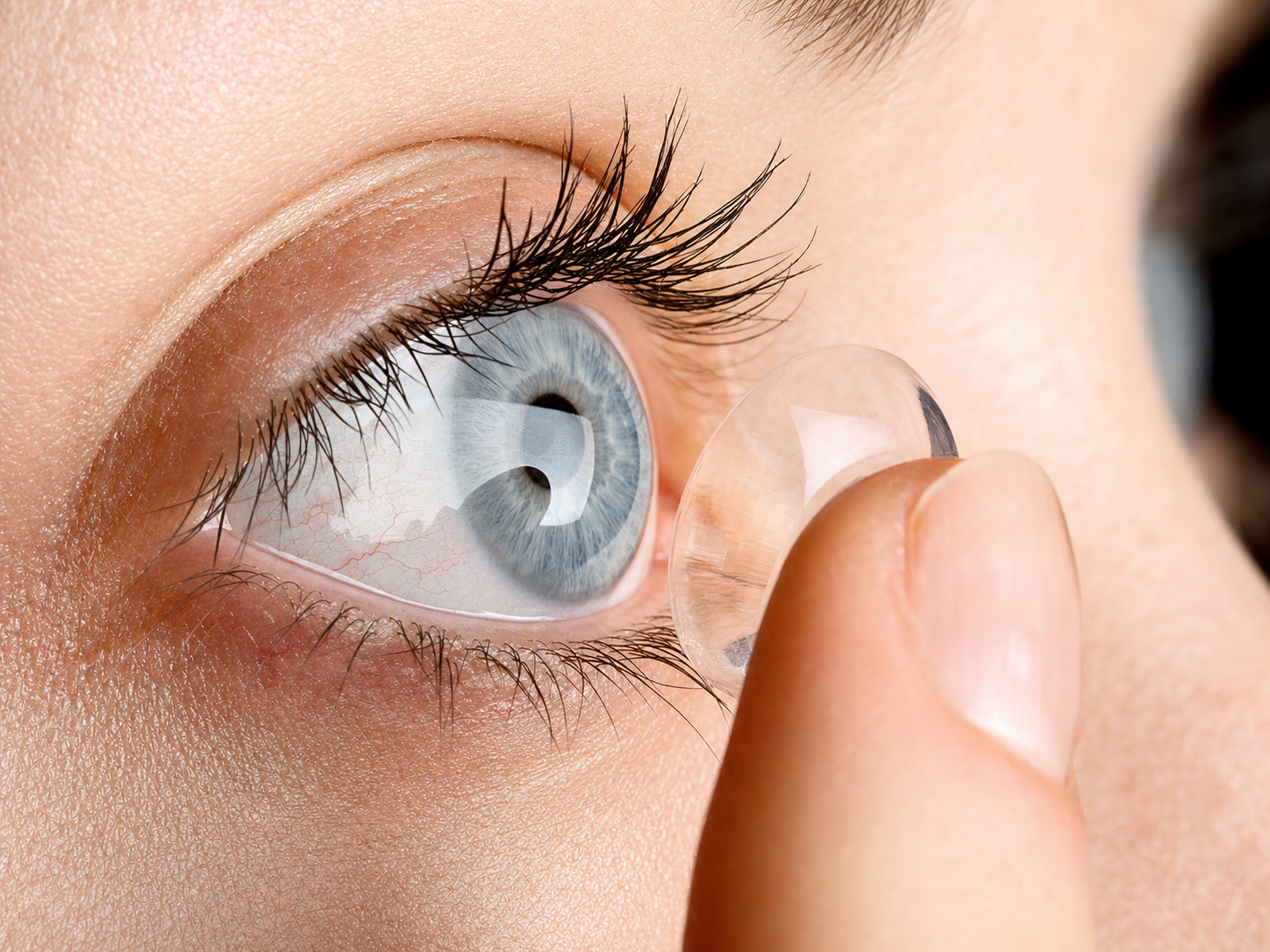
You see through colored contacts through the clear pupil zone in the center of the lens.
Most colored contacts are designed with color printed over the iris area, not directly over the pupil. The center is usually transparent so light can enter your eye and form a clear image.
That is why many natural-looking colored contacts do not noticeably change your vision when they fit well.
A simple way to understand it:
|
Lens Area |
What It Does |
|
Colored iris area |
Changes or enhances the look of your eye color |
|
Clear pupil zone |
Lets you see through the lens |
|
Outer edge or limbal ring |
Adds definition or enlargement effect |
But not every lens design feels the same. Natural brown, gray, hazel, or green lenses may feel visually easy for many wearers, while black lenses, doll-eye lenses, cosplay lenses, Halloween lenses, or dramatic designs may create more noticeable shadows, edges, or contrast.
Can Colored Contacts Cover Your Pupil?
Colored contacts should not cover the center of your pupil when they fit correctly, but the colored edge may move into your line of sight if the lens shifts or if the clear pupil zone is small.
This is one of the most common worries before wearing colored contacts. Many people wonder:
- “Do colored contacts have a hole in the middle?”
- “Will the black part cover my pupil?”
- “Why can I see the color whenever I blink?”
- “Will the design rotate and look weird?”
The answer depends on the lens design and how it fits your eyes.
If the lens stays centered and the clear pupil zone matches your eye comfortably, your vision should stay clear. But if the lens slides, rotates, or sits slightly off-center, the printed area may briefly move over part of your pupil. That can make your vision feel blurry, shadowy, or like there is an edge to your vision.
This may be more noticeable with:
- black contacts
- doll lenses
- circle lenses with bold limbal rings
- Halloween contacts
- cosplay contacts
- lenses with small clear centers
- larger-diameter lenses
- two-tone or highlighted designs that need a certain position
A slight edge or “aura” may happen with some dramatic lenses, especially at first. But if the lens repeatedly blocks your vision, slides over your pupil, or makes it hard to read, walk, or drive, it is not a lens you should keep wearing.
Why Do Colored Contacts Sometimes Make Vision Blurry or Foggy?
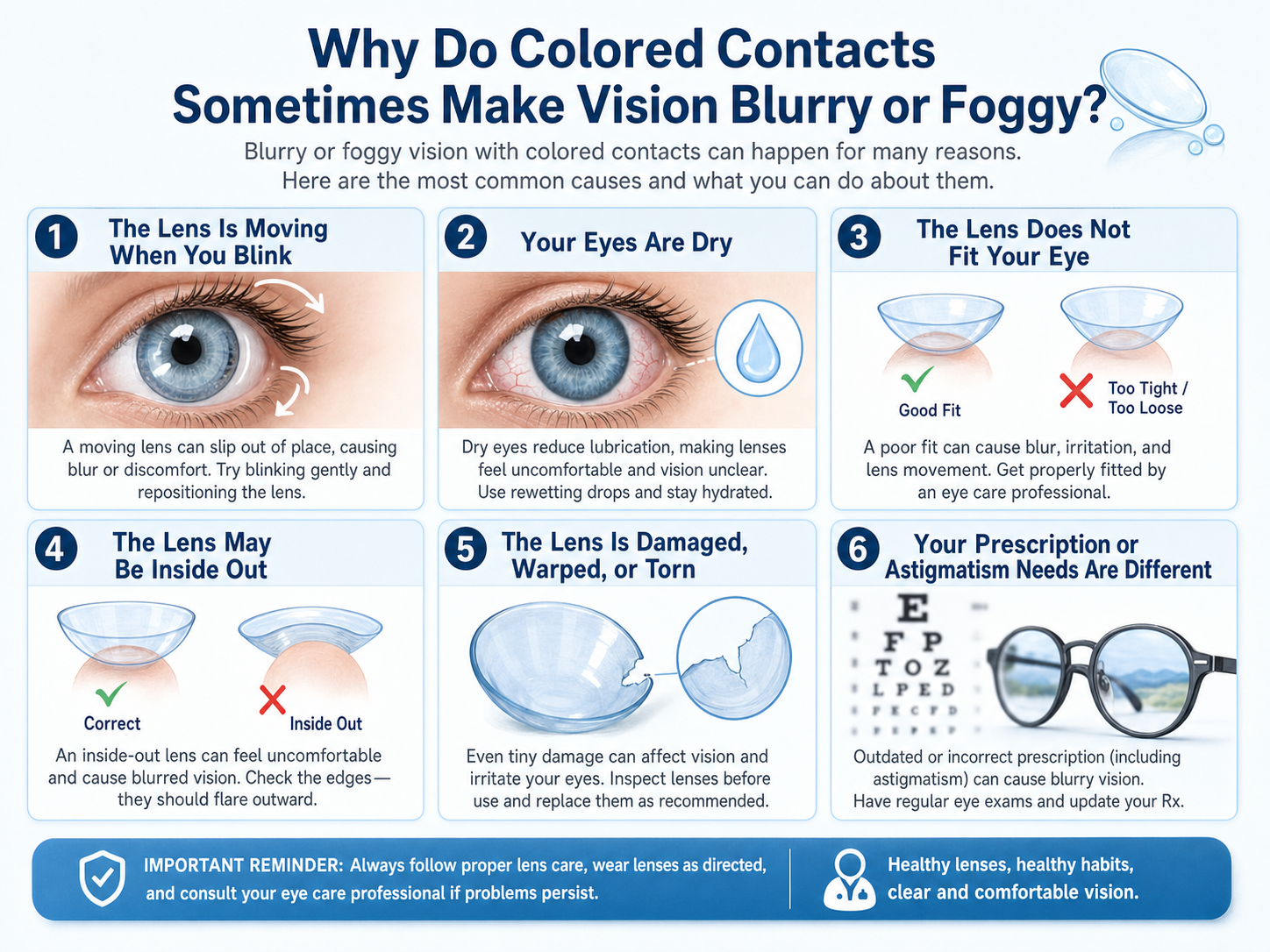
Colored contacts can make vision blurry or foggy because of lens movement, dryness, poor fit, deposits, solution issues, wearing the lens inside out, astigmatism, or a damaged lens.
Blurry vision does not always mean the color itself is blocking your eye. In many cases, the issue is about fit, moisture, lens condition, or care.
1. The Lens Is Moving When You Blink
A soft contact lens is supposed to move slightly when you blink. That small movement helps keep the lens moist.
But if the lens moves too much, slides across your pupil, or moves every time you blink, your vision may go in and out of focus.
You may notice:
- vision clears when you blink, then gets blurry again
- One eye feels stable while the other moves around
- the lens slides downward or sideways
- the colored part moves into your pupil area
- The lens feels like it is not “suctioning” or sitting properly
A little movement is normal. Repeated sliding, folding, popping out, or blocking your pupil is not.
2. Your Eyes Are Dry
Dryness can make colored contacts feel foggy, heavy, or uncomfortable. When your tear film becomes unstable, the lens surface may not stay evenly hydrated. This can create a smeared, greasy, or cloudy feeling.
Dryness may feel like:
- foggy vision after a few hours
- blurry vision that improves after blinking
- a heavy feeling in the eyes
- mild burning or scratchiness
- lenses that feel less comfortable over time
If dryness happens often, do not simply push through it. Your eyes may need an alternative lens material, a different wearing schedule, a different care routine, or a professional fitting.
3. The Lens Does Not Fit Your Eye
Not all contacts fit every eye the same way.
Base curve, diameter, lens material, and your natural eye shape all affect how a contact lens sits on your eye. If the base curve or diameter is not right for you, the lens may move too much, feel too tight, fold, pop out, or create unstable vision.
A poor fit may cause:
- blurry vision
- lens sliding
- lens rotation
- edge awareness
- discomfort
- redness
- one eye feels different from the other
This is why decorative contacts still need a proper prescription and fitting. The FDA states that an eye doctor must measure each eye to properly fit contact lenses, including decorative lenses. (fda.gov)
4. The Lens May Be Inside Out
If a contact lens is inside out, it may not sit correctly on your eye. It can move more, feel irritating, or make your vision unstable.
Signs that a lens may be inside out include:
- the edges flare outward instead of forming a smooth bowl
- the lens feels sharp, scratchy, or unstable
- it moves around more than usual
- your eye water quickly after insertion
If something appears wrong, remove the lens, inspect it, and reinsert it only if it is clean, undamaged, and correctly oriented.
5. The Lens Is Damaged, Warped, or Torn
Never wear a colored contact lens that is torn, warped, chipped, folded, or not round.
A damaged lens can scratch or irritate your eye and may cause blurry vision, pain, redness, watering, or a foreign-body sensation.
Do not wear the lens if you notice:
- a tear
- a raised area
- a warped shape
- a folded edge
- roughness
- a chip
- color flaking or unusual surface changes
If a lens looks wrong before wearing it, do not “test it anyway.” Your eye comfort matters more than the look.
6. Your Prescription or Astigmatism Needs Are Different
If you have astigmatism, regular colored contacts may not sit or focus the same way as lenses fitted for your eyes.
Astigmatism can make vision feel:
- blurry
- doubled
- shadowed
- unstable
- worse at night
- blurry around the edges
Some people with astigmatism need toric contact lenses or specific measurements from an eye care professional. Regular plano or spherical colored contacts may not provide stable vision for every eye.
Is It Normal for Colored Contacts to Move Around?
A small amount of movement is normal, but colored contacts should not slide across your pupil, fold, pop out, or make your vision repeatedly blurry.
Soft contact lenses naturally move a little with each blink. That does not always mean something is wrong.
Usually Normal
These experiences may be normal during adjustment:
- slight movement when blinking
- mild awareness for the first few minutes
- brief blur that clears quickly
- a lens settling into place after insertion
- minor rotation in non-positioned cosmetic designs
Not Normal
Remove the lenses if you experience:
- the lens repeatedly sliding over your pupil
- one lens moving much more than the other
- the lens folding in your eye
- the lens popping out when you blink
- sharp pain
- strong burning
- heavy watering
- redness
- vision that stays blurry
- the lens getting stuck under your eyelid
Some theatrical, toric, or specialty lenses may use orientation features, but not every colored contact is weighted. If a design needs to stay in a specific position, check the product details and ask an eye care professional whether that lens type is suitable for your eyes.
Can Colored Contacts Affect Your Vision at Night?
Yes, some colored contacts can make vision feel dimmer, shadowy, or less clear at night because your pupils naturally dilate in low light.
In bright light, your pupils are smaller. In low light, your pupils dilate to let in more light. If your pupil becomes larger than the clear center of the contact lens, you may notice shadows, halos, blur, or a darker edge in your vision.
This can be more noticeable with:
- black contacts
- dark brown or deep gray lenses
- doll-eye lenses
- Halloween contacts
- cosplay lenses
- small-pupil-hole designs
- bold limbal rings
- full-coverage or dramatic lenses
If you are trying a new pair of colored contacts, test them first in a safe indoor setting and in daylight. Do not wear new dramatic lenses for the first time while driving at night.
If your vision feels dim, blurry, shadowed, or unstable in colored contacts, do not drive in them.
Do Black, Doll, Halloween, or Cosplay Contacts Block More Vision?
They can affect vision more than natural-looking colored contacts, especially if the design has a smaller clear center, darker print, larger diameter, or stronger graphic pattern.
This does not mean every dramatic lens is unsafe or impossible to wear. It means you should have the right expectations.
Natural-style colored contacts are usually designed for a softer, everyday look. Dramatic lenses are often designed for impact: bigger eyes, darker contrast, fantasy effects, anime-inspired looks, or character transformation.
Because of that, they may feel different visually.
You may notice:
- stronger edge awareness
- a darker view in dim lighting
- slight shadow around your pupil
- more visible lens rotation
- less comfort for long wear
- a “photo-only” feeling with some styles
For bold cosplay, Halloween, or doll-eye looks, it is smart to test the lenses beforehand. Wear them for a short period first, make sure your vision is clear, and avoid relying on them for situations where stable vision is important.
Can Astigmatism Make Colored Contacts Blurry?
Yes. Astigmatism can make colored contacts feel blurry, unstable, or poorly centered if the lens is not properly fitted to your eye shape and prescription.
Astigmatism means the front surface of the eye is shaped in a way that can make light focus unevenly. Because of this, some people need toric lenses that are designed to sit in a specific orientation.
If you have astigmatism, regular colored contacts may:
- rotate too much
- feel unstable
- blur your vision
- create halos
- feel uncomfortable
- fail to correct your vision clearly
Having astigmatism does not automatically mean you can never wear colored contacts. But it does mean you should be more careful and speak with an eye care professional about what lens type is appropriate for you.
Do not use TikTok comments or online guesses to diagnose astigmatism. If your lenses keep moving, blurring, burning, or feeling unstable, get your eyes checked.
What Should Colored Contacts Feel Like When They Fit Well?
Well-fitting colored contacts should feel stable, comfortable, and clear after they settle.
A good wearing experience usually means:
- You can see clearly through the center
- The lens does not slide over your pupil
- The lens does not pop out when you blink
- Both eyes feel similar
- There is no sharp pain
- There is no strong burning
- Your eyes do not become very red
- Your vision does not stay foggy
- The lens feels calm after the first few minutes
At EYEVOS, we believe colored contacts should support both the look you love and a calm, wearable feeling. A beautiful lens should not ask you to ignore pain, redness, or unclear vision.
If a pair does not feel right, pause. Remove the lenses, check them, and choose eye comfort over forcing the look.
What Should You Check Before Buying Colored Contacts?
Before buying colored contacts, check the prescription requirement, lens diameter, base curve, material, replacement cycle, clear pupil zone, care instructions, seller transparency, and customer support.
Use this checklist before choosing a pair:
|
What to Check |
Why It Matters |
|
Prescription requirement |
Decorative contacts still need a valid prescription in the U.S. |
|
Diameter |
Affects enlargement, comfort, and lens stability |
|
Base curve |
Helps determine how the lens sits on your eye |
|
Material |
Can affect oxygen flow, moisture, and comfort |
|
Water content |
May affect how the lens feels on your eyes |
|
Replacement cycle |
Tells you how long the lens can be used after opening |
|
Clear pupil zone |
Affects how easily you see through the lens |
|
Design type |
Natural, doll, cosplay, black, or Halloween styles may feel different |
|
Care instructions |
Helps reduce irritation and infection risk |
|
Seller transparency |
Clear product details help you make safer decisions |
|
Support policy |
Important if lenses arrive damaged or defective |
The CDC states that all contact lenses, including decorative ones, need a prescription and proper care to reduce the risk of eye infections. The CDC also advises cleaning lenses with contact lens disinfecting solution, not water or saliva. (cdc.gov)
What Should You Do If Colored Contacts Blur or Block Your Vision?
If colored contacts blur or block your vision, remove them safely, inspect the lens, and do not continue wearing them if your vision stays unclear or your eyes feel painful.
Here is a simple step-by-step response:
- Wash and dry your hands.
- Remove the lens gently.
- Check the lens for tears, warping, folding, chips, or surface defects.
- Make sure the lens is not inside out.
- Rinse only with fresh contact lens solution if the lens is safe to reuse.
- Do not use water, saliva, or old solution.
- Let your eyes rest.
- Wear glasses instead if your eyes feel irritated.
- Contact an eye care professional if symptoms continue.
Do not try to fix discomfort by sleeping in the lenses, rinsing them with tap water, or using saliva. The CDC advises removing contact lenses before water activities such as showering or swimming, and the FDA says to use only contact lens solution to store or rinse contacts. (cdc.gov)
When Should You Stop Wearing Colored Contacts Immediately?
Stop wearing colored contacts immediately if you experience pain, burning, severe redness, swelling, discharge, light sensitivity, or blurry vision that persists.
Remove the lenses and contact an eye care professional if you notice:
- sharp pain
- strong burning or stinging
- heavy watering
- redness that does not calm down
- swelling
- discharge
- light sensitivity
- blurry vision after removing the lenses
- a lens stuck under your eyelid
- a torn lens in your eye
- a scratching or foreign-body feeling
- sudden change in vision
Colored contacts should enhance your look, not make you feel like you have to tolerate pain.
Final Takeaway
Colored contacts should not block your central vision when properly fitted and designed with a clear pupil zone. But your vision can feel blurry, foggy, dim, shadowed, or partially blocked if the lens shifts, the pupil opening is too small, your pupils dilate in low light, or the lens does not fit your eyes.
Before wearing colored contacts, check the lens details, follow proper care instructions, and test new lenses in a safe setting. If your eyes feel painful, red, irritated, or unclear, remove the lenses and seek professional advice.
Your eyes should feel clear, comfortable, and cared for. The prettiest lens is the one your eyes can wear calmly.
FAQ
Do colored contacts block your vision?
Most standard colored contacts should not block your central vision because the center of the pupil is usually clear. However, they may make vision feel blurry or partially blocked if the lens shifts, the pupil zone is small, or your pupils dilate in low light.
Can you see through colored contacts?
Yes. You see through the clear pupil zone in the center of the lens. The colored part usually sits over the iris area, not directly over the pupil.
Why do my colored contacts make my vision blurry?
Colored contacts may make your vision blurry if they are dry, damaged, dirty, inside out, poorly fitted, or moving when you blink. Astigmatism or an incorrect prescription can also make vision unclear.
Why can I see a black edge on my contact lens?
You may see a black edge if the lens shifts, the clear center is small, or your pupils dilate in dim lighting. If it affects your ability to see clearly, remove the lenses and do not drive in them.
Do colored contacts affect night vision?
They can. In low light, your pupils dilate, and some colored lens designs may create shadows, halos, blurring, or a dimmer view.
Can I drive with colored contacts?
Only drive if your vision is clear, stable, and comfortable. If colored contacts make your vision blurry, dim, shadowed, or unstable, do not drive while wearing them.
Are Halloween contacts harder to see through?
Some Halloween, black, doll, or cosplay contacts may affect vision more than natural colored contacts because they often use bolder prints, darker colors, larger diameters, or smaller clear centers.
Can astigmatism make colored contacts blurry?
Yes. People with astigmatism may need toric lenses or specific fitting from an eye care professional. Regular colored contacts may feel unstable or blurry if they do not match your eye shape.
Should colored contacts hurt?
No. Colored contacts should not cause sharp pain, strong burning, heavy watering, or redness. If they do, remove them immediately.
Do I need a prescription for non-prescription colored contacts?
In the United States, decorative contact lenses require a valid prescription even if they do not correct vision. This helps ensure the lenses are properly fitted for your eyes. (fda.gov)
Learn More
- How to Put In Colored Contacts for Beginners
- The Best Doll Makeup Looks for 2026: 6 Dolly Lenses & How to Wear Them
- Where to Buy Colored Contacts Safely? Are AliExpress and Shein Colored Contacts Worth the Risk?
- What Colored Contacts Should You Wear for Ariana Grande Concert Makeup?
- First Time Wearing Colored Contacts? How to Put Them In Easily and Safety
- Why Do Some Colored Contacts Feel Like Nothing? The Secret to Ultra-Comfortable Lenses
- Can I Wear Colored Contacts All Day? What 8+ Hours Actually Feels Like
- What If You Were Invited to the Wedding of the Century? A Guide to Guest-Worthy Eyes
- Do Colored Contacts Show Up on Dark Eyes? Here's What to Look For
- What Color Contacts Are Best for Brown Eyes? A Guide for Natural and Bold Looks
- Can I Sleep With Colored Contacts? Why You Should Think Twice
- The 2026 EYEVOS Summer Makeup Contest: We Asked 30 Artists What Summer Looks Like —— They Painted the Answer on Their Faces.
- Can I Wear Colored Contacts With Glasses? A Simple Guide for Beginners
- How Long Do Colored Contacts Last? Daily,Monthly,and Yearly Lens Guide
- Why Are My Colored Contacts Blurry? 7 Common Causes and What to Do
References
For more information about contact lens safety and care, refer to:
- U.S. Food and Drug Administration (FDA). Decorative Contact Lenses.
- Centers for Disease Control and Prevention (CDC). Decorative Contact Lenses.
- Centers for Disease Control and Prevention (CDC). Healthy Habits: Keeping Water Away from Contact Lenses
- U.S. Food and Drug Administration (FDA). Contact Lens Care Products Labeling
Disclaimer
This article is for educational purposes only and is not medical advice. Colored contacts are eye-care products and should be fitted and used according to guidance from an eye care professional. If you experience pain, redness, burning, swelling, discharge, light sensitivity, or blurry vision that does not clear, remove the lenses and contact an eye care professional.
Comment