Can You Wear Colored Contacts Over Prescription Contacts? Why You Shouldn’t Layer Lenses
Aug 04,2026 | EYEVOS
Can You Wear Colored Contacts Over Prescription Contacts? Why You Shouldn’t Layer Lenses
Last reviewed: August 2026
Short Answer: Can You Wear Colored Contacts Over Prescription Contacts?
No, you should not wear colored contacts over prescription contacts. Your eye should wear one properly fitted contact lens at a time, unless an eye care professional has specifically prescribed a special lens system for a medical reason.
Layering two lenses in one eye — sometimes called stacking contacts or layering lenses — can cause the lenses to shift, blur your vision, reduce comfort, trap debris, and make them harder to remove. It may feel like a quick beauty workaround, especially if you already wear prescription contacts and have found a pair of plano-colored contacts you love, but it is not a safe DIY solution.
Colored and decorative contact lenses are still medical devices, even when they do not correct vision. The FDA states that colored and decorative contact lenses require a valid prescription, and CDC guidance emphasizes that contact lenses need proper fitting, wear, cleaning, and care to reduce the risk of eye injury or infection. (fda.gov)
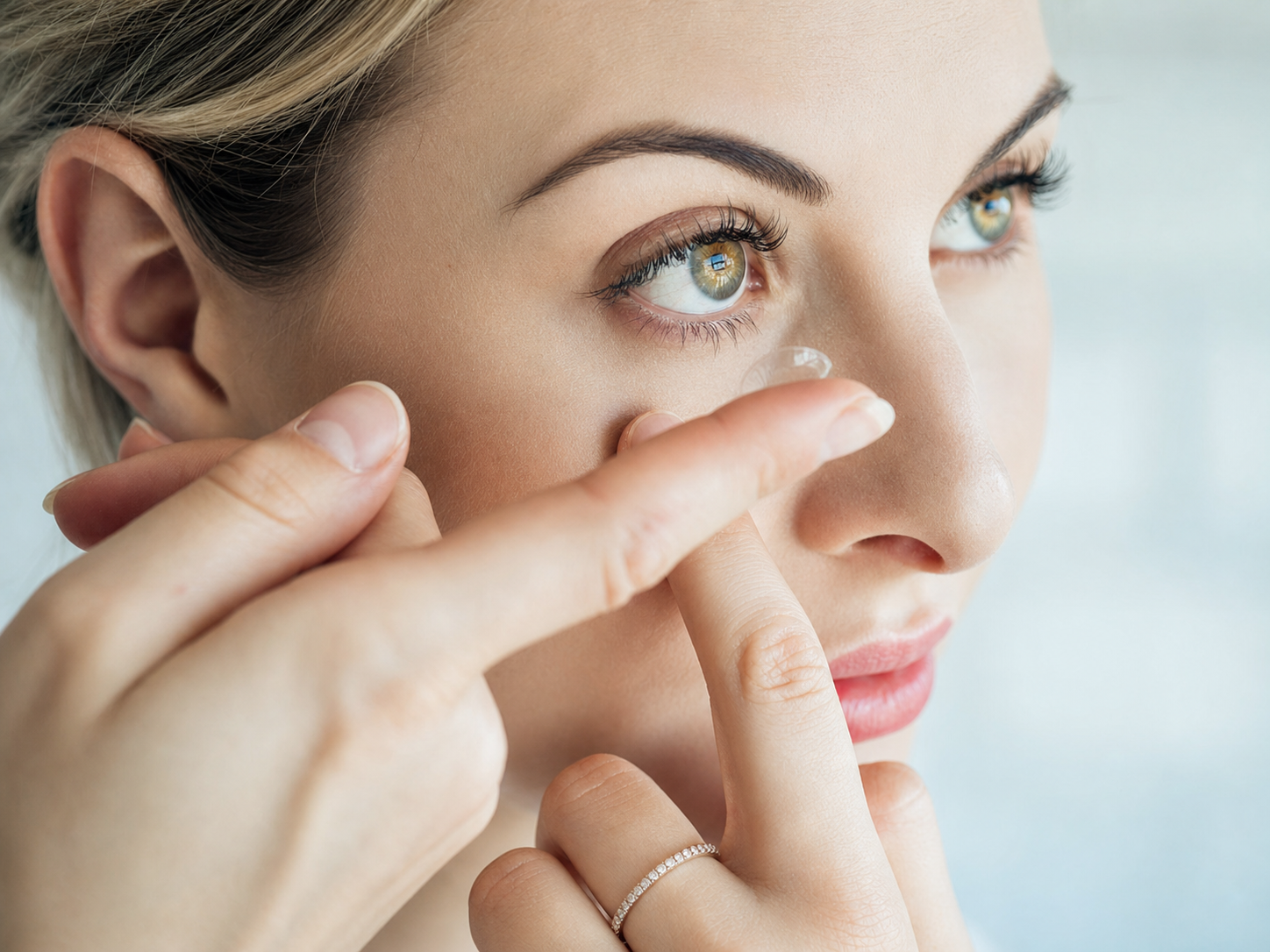
Why Do People Want to Layer Colored Contacts?
Many people consider layering contacts because they want to address a real beauty or vision problem.
You might be tempted to wear colored contacts over regular contacts if:
- You already wear clear prescription contacts every day.
- You bought plano colored contacts that do not have your prescription.
- You found red, black, anime, cosplay, or Halloween contacts that are not available in your power.
- You wear toric contacts for astigmatism and cannot find colored toric options you like.
- You want a larger diameter, darker limbal ring, or more dramatic eye effect.
- You only need to look for one party, photoshoot, cosplay event, or Halloween night.
If this thought crossed your mind, you are not alone. It can seem like an easy fix: prescription contacts for clear vision, colored contacts on top for the look. But your eye is not designed to hold two cosmetic or corrective lenses stacked together.
A better approach is to choose one properly fitted pair that suits your eyes, your prescription needs, and your desired look.
What Happens If You Put Colored Contacts Over Regular Contacts?
If you put colored contacts over regular contacts, both lenses can become unstable. The top lens is not sitting directly on your eye, so it may slide, rotate, stick to the lower lens, or move out of place.
Here is what can happen.
1. Your Vision May Become Blurry
Contact lenses are designed to sit directly on the eye in a specific position. When you stack one lens over another, the optical alignment can change.
This may cause:
- Blurry vision
- Double or unstable vision
- Halos or glare
- A lens that feels off-center
- Worse vision if you have astigmatism
If you wear toric lenses, layering is especially problematic because they need to remain in a stable position to correct astigmatism properly.
2. The Lenses May Slide, Rotate, or Stick Together
Two soft lenses can stick together, especially if your eyes become dry. This can make them feel like one thicker, slippery lens — or like they are stuck together.
That can make removal harder and more stressful. If you rub your eye or try to forcefully pull the lenses out, you may irritate or scratch the surface of your eye.
3. Your Eyes May Feel Dry, Tight, or Burning
Layering contacts can add extra thickness and interfere with your natural tear film. Instead of feeling smooth and hydrated, your eyes may start to feel:
- Dry
- Tight
- Burning
- Scratchy
- Watery
- Tired
- Sensitive to light
A lens that feels uncomfortable is not something to “push through.” Discomfort is a sign that your eye needs a break.
4. Debris Can Get Trapped Between the Lenses
Makeup, dust, fibers, protein deposits, or tiny particles can get trapped between two lenses. When that happens, the debris may rub against the lens surface or your eye.
This can increase irritation and may raise the risk of scratches or infection. The CDC notes that wearing contact lenses without proper fitting and care instructions can lead to eye injury, infection, or other complications. (cdc.gov)
5. The Lenses May Become Harder to Remove
Layered lenses can be difficult to separate, especially when dry. You may not know whether you removed one lens or both, and you may accidentally keep one lens in longer than intended.
If a lens feels stuck, do not panic or force it. Wash and dry your hands, use contact lens-safe rewetting drops if appropriate, blink gently, and contact an eye care professional if you cannot remove it comfortably.
Can I Layer Contacts Just for One Night, Halloween, or Cosplay?
No, you should not layer contacts even for one night, Halloween, cosplay, or a photoshoot. Short-term wear does not make stacking lenses safe.
In fact, Halloween and cosplay situations can make discomfort more likely because they frequently involve:
- Heavy eye makeup
- False lashes
- Long wear time
- Dry indoor air
- Outdoor wind or dust
- Parties where you may forget proper lens care
- Late nights when your eyes are already tired
If you want a dramatic eye look for one event, plan ahead. Choose prescription-colored contacts if you need vision correction, or ask your eye care professional whether plano-colored contacts with prescription glasses could work for you.
The FDA reminds consumers that decorative contact lenses are medical devices and should be purchased from companies that require a prescription and sell FDA-cleared or approved contact lenses. (fda.gov)
What If My Colored Contacts Are Plano or Non-Prescription?
Plano colored contacts have zero corrective power, but they are still contact lenses. “Non-prescription” does not mean “one-size-fits-all” or “safe to layer.”
Plano lenses are often used for cosmetic looks, cosplay, Halloween, or fashion styling. But they still sit directly on the eye and still need to fit your eye’s shape and size.
Do not wear plano colored contacts over prescription contacts. Instead, consider safer options:
- Prescription colored contacts made with your eyesight correction
- Plano colored contacts with prescription glasses
- A professionally fitted lens option recommended by your eye care provider
The FDA states that decorative contact lenses require a valid prescription that includes the brand name, lens measurements, and expiration date. (fda.gov)
What If I Wear Toric Contacts for Astigmatism?
Do not layer colored contacts over toric contacts. Toric lenses are designed to correct astigmatism and must remain in a specific orientation on your eye.
If you place another lens on top of a toric lens, it may:
- Make the toric lens rotate
- Shift the lens out of position
- Blur your vision
- Causes unstable correction
- Feel thicker or more uncomfortable
- Make removal more difficult
This can be frustrating if you love colored contacts but cannot easily find toric colored lenses. Still, layering is not a good workaround.
Better options include:
- Asking your eye care professional about toric colored contacts
- Wearing properly fitted plano colored contacts with prescription glasses
- Choosing a colored lens design available in your prescription range
- Using makeup, lashes, or styling to create the look without stacking lenses
Is Piggybacking Contact Lenses Ever Allowed?
Piggyback contact lenses can be used in specific medical situations, but they are not the same as cosmetic layering.
In some clinical cases, an eye care professional may prescribe a special lens system that involves multiple lenses. This is done for medical reasons, with specific lens types, measurements, follow-up exams, and professional supervision.
That is very different from placing a colored cosmetic lens over your everyday prescription contact at home.
So the safe rule is:
Do not layer contact lenses unless your eye care professional has specifically fitted and prescribed that system for you.
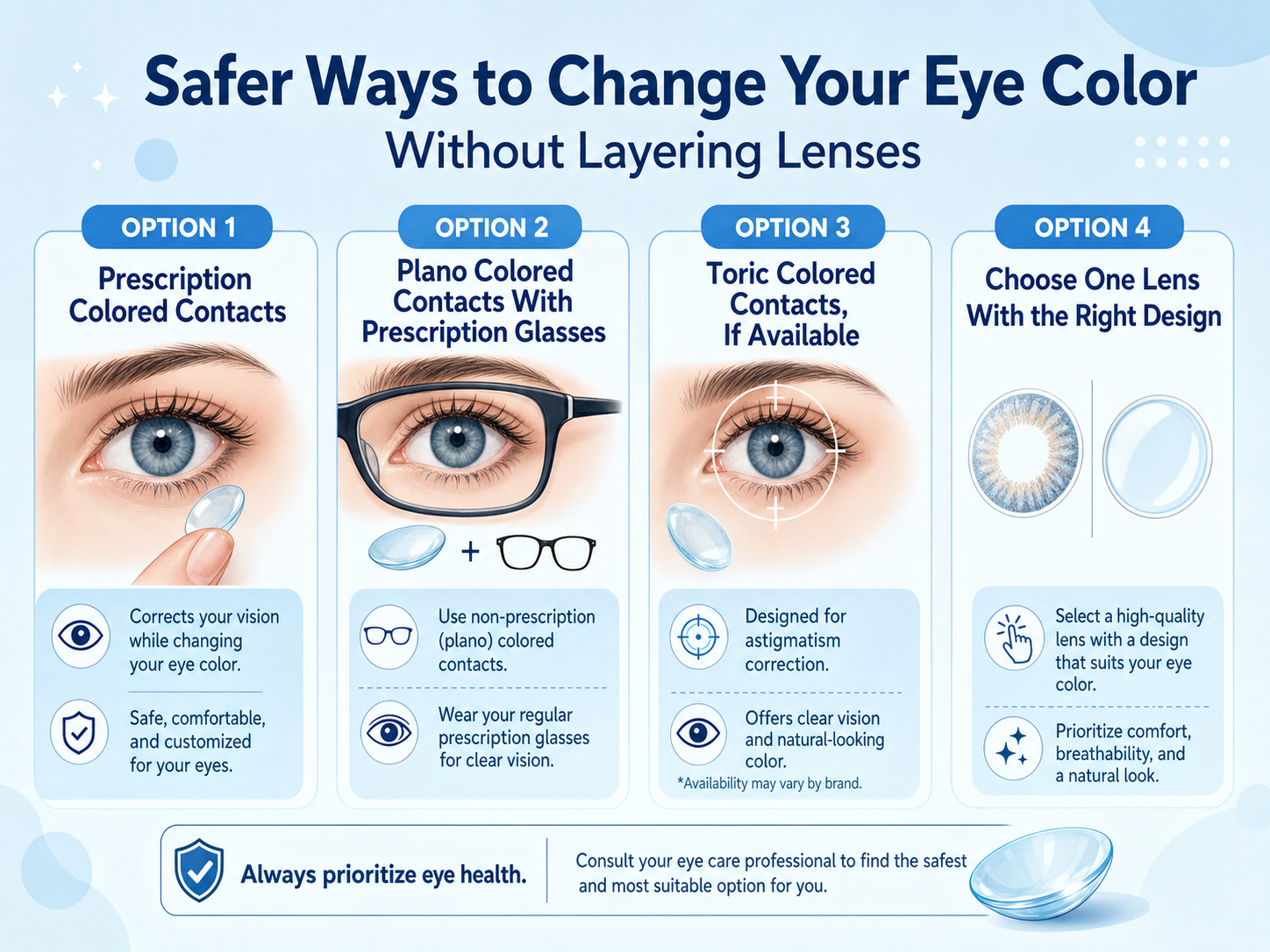
Safer Ways to Change Your Eye Color Without Layering Lenses
You do not need to stack contacts to create a beautiful eye look. There are safer, more thoughtful alternatives.
Option 1: Prescription Colored Contacts
If you need vision correction and want to change your eye color, prescription colored contacts may be the most direct option.
They combine vision correction and color in one lens, so you do not need to place a decorative lens over a clear prescription lens.
Remember: a glasses prescription is not always the same as a contact lens prescription. Contact lens fitting details include base curve, diameter, lens material, and brand.
Option 2: Plano Colored Contacts With Prescription Glasses
If your favorite colored contacts are plano, you may be able to wear them with prescription glasses instead of prescription contact lenses.
This gives you:
- Color from the plano lenses
- Vision correction from your glasses
- No need to stack two lenses on the eye
However, plano contacts still need proper fitting and safe lens care.
Option 3: Toric Colored Contacts, If Available
If you have astigmatism, ask your eye care professional whether toric colored contacts are available for your prescription.
The options may be more limited than regular colored contacts, but it is still safer to explore a professionally fitted option than to layer lenses yourself.
Option 4: Choose One Lens With the Right Design
If you want to layer contacts for a stronger color effect, a larger diameter, a darker ring, or a cosplay look, look for a lens that already gives you the effect you want.
Consider:
- Diameter
- Graphic diameter
- Base curve
- Limbal ring design
- Opacity
- Color payoff on dark eyes
- Replacement cycle
- Comfort profile
- Wear time
At EYEVOS, we believe the better beauty choice is not stacking two lenses, but choosing one thoughtful pair with the right color, fit details, care routine, and mood for your look.
What Should You Check Before Buying Colored Contacts?
Before buying colored contacts, look for clear product and safety information. A beautiful lens should not leave you guessing.
Use this checklist:
- Does the seller require a valid contact lens prescription where required?
- Is the lens available in your prescription power, if you need correction?
- Is the diameter listed?
- Is the base curve listed?
- Is the water content listed?
- Is the replacement cycle clear?
- Are care instructions provided?
- Is the lens brand and product information clear?
- Is customer support available?
- Do you know whether the lens is suitable for your eyes?
- Have you had a recent contact lens fitting?
The FDA advises consumers to obtain a valid prescription and follow all instructions, as decorative contact lenses can injure the eyes if not used as directed. (fda.gov)
What Should You Do If You Already Layered Contacts?
If you already wear two contacts in one eye, remove them gently and stop wearing them. Do not keep them in just because the discomfort feels mild.
Follow these steps:
- Wash and dry your hands.
- Remove the lenses gently.
- Do not pull aggressively if they feel stuck.
- Do not rinse the lenses with water.
- Do not use saliva to wet the lenses.
- Switch to glasses for the rest of the day.
- Do not reuse lenses that seem damaged, folded, dry, or dirty.
- Contact an eye care professional if symptoms continue.
Seek professional eye care promptly if you notice:
- Eye pain
- Strong redness
- Blurry vision
- Light sensitivity
- Discharge
- Swelling
- A lens that feels stuck
- An impression that something is still in your eye
CDC guidance says contact lenses should not be rinsed or stored in water, and contact lens wearers should use fresh contact lens solution for storage, never water. (cdc.gov)
Can I Use Eye Drops If My Contacts Feel Dry or Burning?
Only use eye drops that are labeled safe for contact lenses. Not every eye drop is meant to be used while wearing contacts.
If your contacts feel slightly dry, contact lens-safe rewetting drops may help. But if you feel burning, pain, strong redness, blurry vision, or light sensitivity, do not use drops just to push through the discomfort.
Remove your lenses, switch to glasses, and contact an eye care professional if symptoms persist.
Eye drops should not be used to make an unsafe lens setup feel wearable.
Final Takeaway
Do not wear colored contacts over prescription contacts. Layering lenses may appear to be a quick fix for color, cosplay, Halloween, astigmatism, or prescription limitations, but it can make your lenses unstable, uncomfortable, blurry, and harder to remove.
If you want color and clear vision, choose one safer route:
- Prescription colored contacts
- Properly fitted plano colored contacts with prescription glasses
- Toric colored contacts if suitable and available
- One lens design that gives the look you want without stacking
Your eyes should feel clear, calm, and comfortable — not tight, blurry, or difficult to remove.
FAQ
Can you wear colored contacts over prescription contacts?
No. You should not wear colored contacts over prescription contacts unless an eye care professional has specifically prescribed a special lens system for you.
Can you wear non-prescription colored contacts over regular contacts?
No. Plano or non-prescription colored contacts should not be layered over regular contacts. Plano lenses still sit on the eye and still require proper fitting and care.
Can you wear two colored contacts in one eye?
No. Wearing two colored contacts in one eye can make the lenses shift, stick together, blur your vision, and irritate your eye.
Can I layer contacts just for Halloween or cosplay?
No. Even short-term layering may cause discomfort, poor fit, blurry vision, dryness, or difficulty removing the lenses.
What should I do if my colored contacts are not prescription?
Do not place them over prescription contacts. Consider prescription-colored contacts, or ask your eye care professional whether plano-colored contacts with prescription glasses are appropriate for you.
Can I wear colored contacts with glasses?
Yes. Many people wear plano colored contacts with prescription glasses. The colored contacts still need to be properly fitted and cared for.
What if I have astigmatism?
Do not layer colored contacts over toric contacts. Ask your eye care professional about toric colored contacts or other safe options.
Why do layered contacts feel blurry?
Layered contacts can move out of alignment, rotate, or interfere with how light passes through the lenses. This can cause vision to become blurry or unstable.
Why do layered contacts feel stuck together?
Two soft lenses can cling to each other, especially when dry. This can make them harder to separate and remove.
Can I use eye drops while wearing colored contacts?
Only use drops labeled safe for contact lenses. If you have pain, redness, blurry vision, or light sensitivity, remove the lenses and contact an eye care professional.
Learn More
- How to Put In Colored Contacts for Beginners
- The Best Doll Makeup Looks for 2026: 6 Dolly Lenses & How to Wear Them
- Where to Buy Colored Contacts Safely? Are AliExpress and Shein Colored Contacts Worth the Risk?
- What Colored Contacts Should You Wear for Ariana Grande Concert Makeup?
- First Time Wearing Colored Contacts? How to Put Them In Easily and Safety
- Why Do Some Colored Contacts Feel Like Nothing? The Secret to Ultra-Comfortable Lenses
- Can I Wear Colored Contacts All Day? What 8+ Hours Actually Feels Like
- What If You Were Invited to the Wedding of the Century? A Guide to Guest-Worthy Eyes
- Do Colored Contacts Show Up on Dark Eyes? Here's What to Look For
- What Color Contacts Are Best for Brown Eyes? A Guide for Natural and Bold Looks
- Can I Sleep With Colored Contacts? Why You Should Think Twice
- The 2026 EYEVOS Summer Makeup Contest: We Asked 30 Artists What Summer Looks Like —— They Painted the Answer on Their Faces.
- Can I Wear Colored Contacts With Glasses? A Simple Guide for Beginners
- How Long Do Colored Contacts Last? Daily,Monthly,and Yearly Lens Guide
- Why Are My Colored Contacts Blurry? 7 Common Causes and What to Do
- Do Colored Contacts Block Your Vision? What to Expect Before Wearing Them
- Back to School Eye Sets Are Here: Build Your Dolly Eye Look with EYEVOS
References
- U.S. Food & Drug Administration. Colored and Decorative Contact Lenses: A Prescription Is A Must.
- U.S. Food & Drug Administration. Decorative Contact Lenses for Halloween and More.
- Centers for Disease Control and Prevention. About Contact Lens Types.
- Centers for Disease Control and Prevention. Preventing Eye Infections When Wearing Contacts.
- Centers for Disease Control and Prevention. Healthy Habits: Keeping Water Away from Contact Lenses.
Disclaimer
This article is for educational purposes only and is not medical advice. Contact lenses are medical devices. Always follow your eye care professional's guidance. If you experience eye pain, redness, blurred vision, discharge, swelling, light sensitivity, or difficulty removing a lens, remove your lenses and seek professional eye care promptly.
Comment