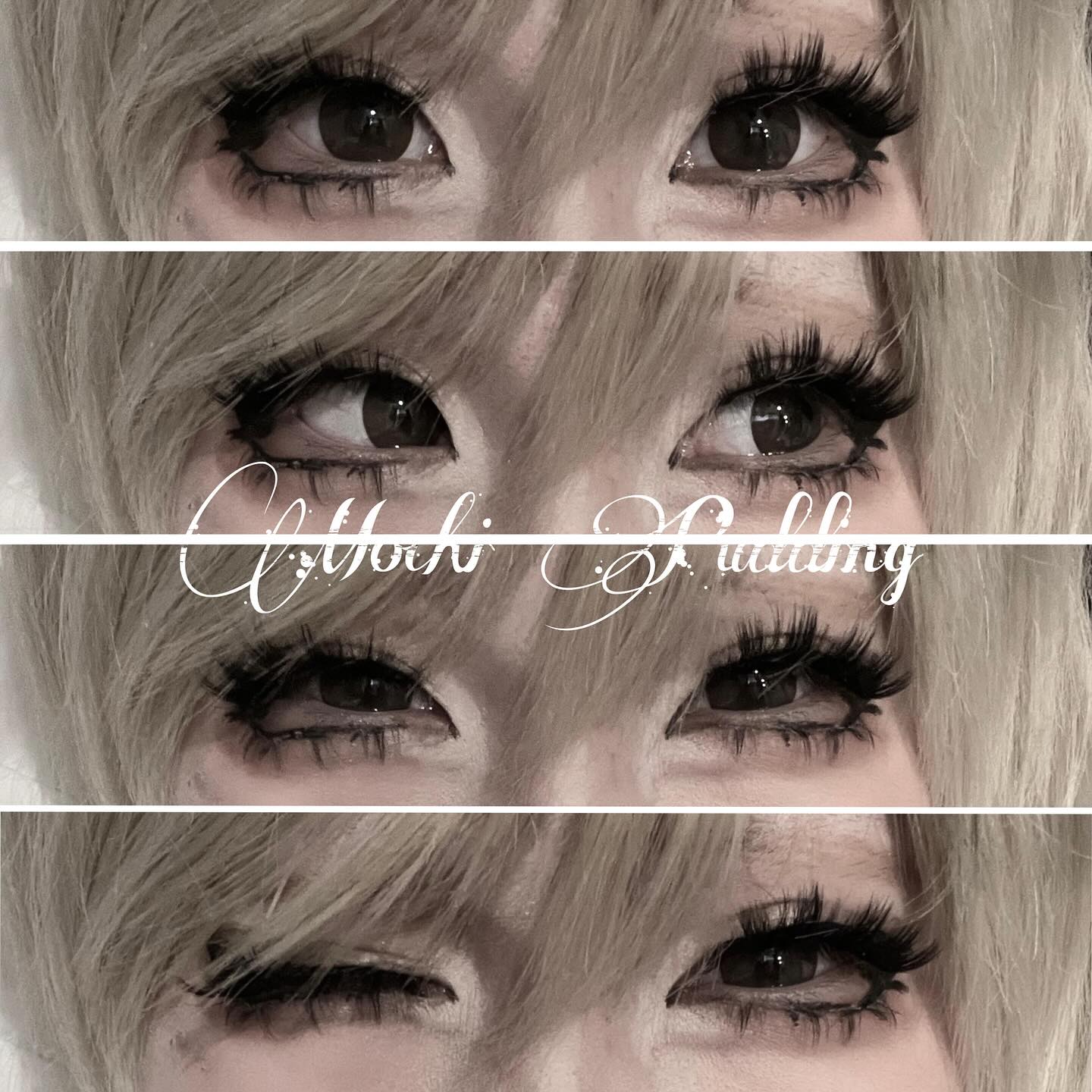
Do Colored Contacts Show Up on Dark Eyes? Here's What to Look For
Jul 06,2026 | EYEVOS
Do Colored Contacts Show Up on Dark Eyes? Here's What to Look For
Short Answer
Yes — colored contacts do show up on dark eyes, but only if they're opaque, multi-tonal, and built with a defined limbal ring. Standard "enhancement tints" designed for light eyes will mostly disappear on brown or dark brown irises. The lens that actually works for you isn't determined by the color name on the box — it's determined by the pigment structure beneath.
Why Colored Contacts Often "Disappear" on Dark Eyes
If you've ever ordered a pair of colored contacts that looked breathtaking in the product photos, then put them on and saw almost nothing — you're not imagining it, and you're not alone. Many wearers with dark brown eyes report the same experience: lenses that appear vivid in the bottle but fade into invisibility once they're on the eye.
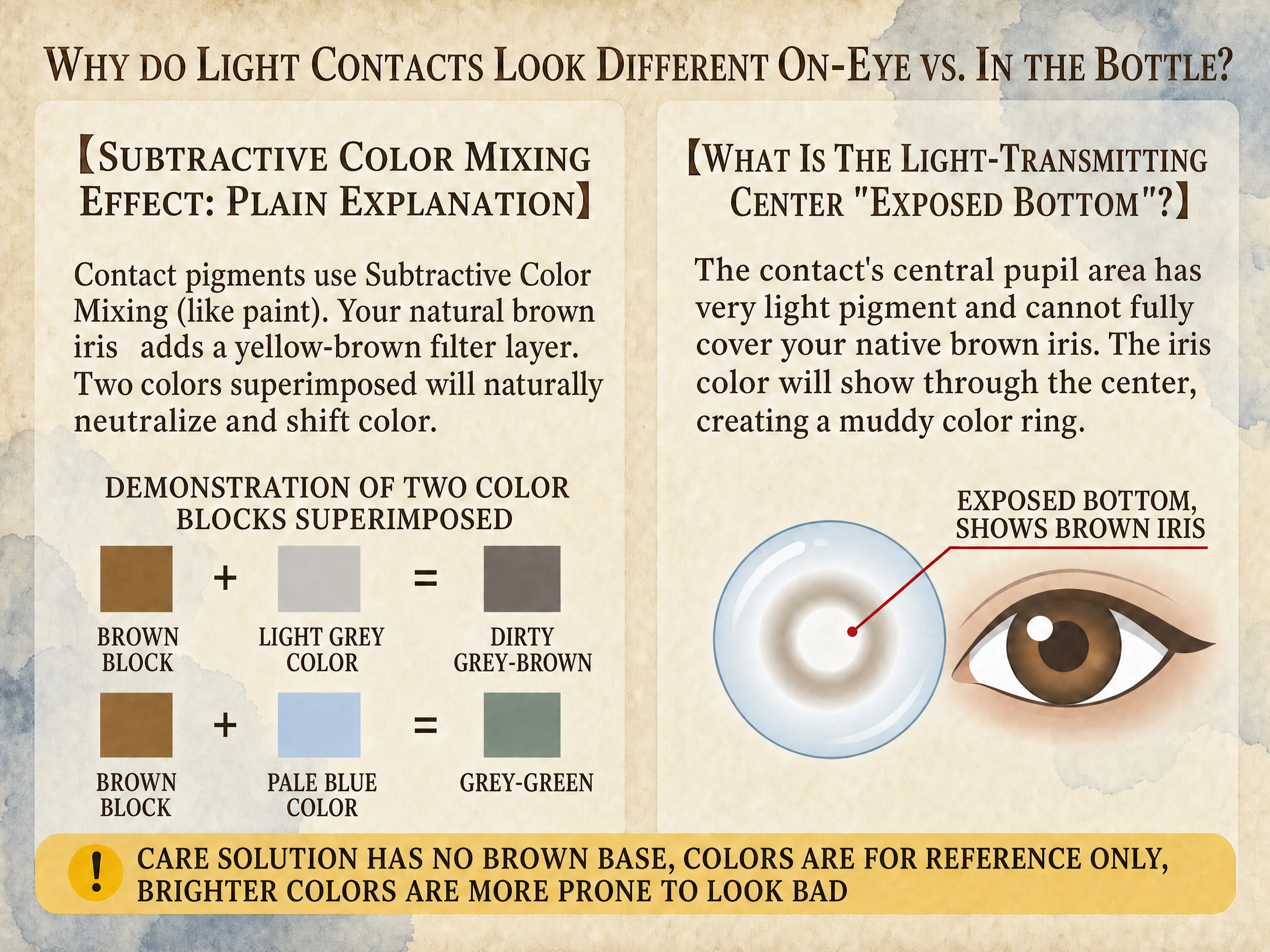
Dark brown irises contain a high concentration of melanin. When a semi-transparent lens sits on top of that pigment, two things happen:
- Subtractive color blending. The lens color and your natural brown layer together. A soft gray becomes muddy. A pale blue becomes greenish. The brighter the lens looks in the bottle, the more disappointing it often looks on the eye.
- The optical zone gives you away. Every colored lens has a clear center so light can reach your pupil. On dark eyes, that small, clear circle becomes a window through which your natural brown peeks through — and once you notice it, you can't unsee it.
This is the single most common reason "pretty" lenses fall flat on dark eyes. It's not the color that failed you — it's the structure.
The 4 Things to Look for in Dark Eyes
1. Opacity Level
Look for the words "opaque" or "high pigmentation" in the product description. This is the single most important variable for dark eyes.
Most colored contacts fall into three opacity tiers:
- Enhancement / Sheer Tints — Made for light eyes. It will not show on dark eyes at all.
- Semi-Opaque — A noticeable but soft effect; works as a gentle warming or subtle tone shift on lighter browns.
- Fully Opaque — The pigment fully covers your natural iris. This is what you need for any real color change on dark or near-black eyes.
If the product page doesn't tell you the opacity, that's a signal worth pausing on.
2. Optical Zone Design
A smaller, well-blended clear center prevents the "ring around the pupil" effect.
Every lens needs a transparent area in the middle so you can see. But on dark eyes, the size and edge of that area decide whether the lens looks natural or obviously layered.
Look for:
- A gradient transition between the clear center and the colored zone (not a hard line)
- A pupil hole that isn't oversized
- Photos where you can see the lens worn on dark eyes in natural lighting, not just studio shots
3. Limbal Ring Definition
A defined dark outer ring keeps the lens looking like a real iris, not a sticker placed on top of your eye.
The limbal ring is the natural dark line that frames a healthy iris. On a lens, a well-designed limbal ring does two things:
- It anchors the new color so it doesn't float
- It gives depth and definition, which is why lenses with a clear limbal ring often photograph as "brighter, larger, more awake eyes"
Without it, even a perfectly opaque lens can look painted on.
4. Undertone Matching
Brown eyes are not all the same brown.
This is the step almost every guide skips, but it's the difference between a lens that suits you and a lens that just sits on your eyes.
- Warm-toned brown eyes (golden or reddish undertones) tend to pair beautifully with hazel, honey, olive green, and warm grays.
- Cool-toned brown eyes (gray or ashy undertones) often look strange in warm browns — they can turn slightly orange — and look far better in cool grays, forest green, violet, or true blue.
Many wearers with cool-toned brown eyes report that warm brown lenses look unexpectedly orange on them, while cool grays, greens, and purples blend much more naturally — a useful note that "brown" is not one shade.
To find your undertone, look at your iris in natural daylight (not under warm indoor lighting). If you see golden flecks, you're warm. If you see ashy or grayish shades around the pupil, you're cool.
See These 4 Elements in Action

Reading about opacity, optical zones, limbal rings, and undertones is one thing — recognizing them at a glance is another. The table below breaks down four of our most-loved styles across all four elements, so you can see how each design choice shapes a completely different mood on dark eyes.
|
8.5 / 10 Medium-high, warm coverage |
9 / 10 Soft radial blend |
9 / 10 Clearly defined, natural |
9.5 / 10 Warm brown eyes |
Everyday natural enhancement |
|
|
9.5 / 10 Full multi-tonal opacity |
9 / 10 Deep, dimensional pupil zone |
9.5 / 10 Bold, high-contrast |
9 / 10 Cool / neutral brown eyes |
Striking, statement-making gaze |
|
|
9 / 10 Full cool-toned coverage |
9.5 / 10 Ultra-smooth transition |
8 / 10 Subtle, understated |
9 / 10 Cool brown eyes |
Daily-friendly cool-tone shift |
|
|
9 / 10 Luminous light gray |
8.5 / 10 Bright, open center |
Ring-free by design |
9 / 10 Cool undertone |
Y2K / grunge / alt-aesthetic looks |
Notice that the first three styles all include a defined limbal ring — that's what gives them their "natural but enhanced" everyday realism.
Forbidden Arua intentionally omits the ring to create a piercing, borderless gaze designed for Y2K, grunge, vampiric, and alt-subculture aesthetics. In other words: the scores tell you how well each lens delivers on its intended mood — not which lens is "better."
Once you can spot these four elements in any lens photo, choosing the right color becomes much easier — which is exactly what we'll cover next.
How Different Colors Actually Look on Dark Eyes
Once you've understood the structure, color choice becomes much easier. Here's what to realistically expect from each shade on dark or dark brown eyes — assuming the lens is fully opaque and well-designed.
|
Lens Color |
On Dark Brown Eyes |
Best For |
|
Soft, warm lift; brightens without obvious drama |
Everyday wear, "did she change something?" looks |
|
|
Subtle shift; works on both warm and cool undertones |
First-time wearers |
|
|
Smoky, moody — needs high opacity to truly show |
Editorial, cool-tone makeup |
|
|
Earthy and surprisingly natural on dark eyes |
Autumn looks, natural-but-noticeable |
|
|
The hardest color to pull off — but stunning with the right opacity |
Statement looks, photography |
|
|
A soft glow rather than a full color change |
Festivals, cosplay, soft-girl aesthetics |
A note on blue specifically: blue is the shade where opacity matters the most. If a blue lens is even slightly translucent, your natural brown will turn it greenish or muddy. When a blue lens is fully opaque and multi-tonal, the result can be genuinely beautiful on including the darkest eyes.
Subtle Enhancement vs. Full Color Change — Which Are You Actually After?
Before you choose a color, choose a direction. Most "wrong purchase" stories happen because the wearer wanted A but bought B.
- Natural enhancement (you still look like you, just lifted) → hazel, light brown, soft warm gray, in semi-opaque
- Noticeable but believable (people notice your eyes, not your lenses) → cool gray, olive green, deep hazel, in fully opaque with a strong limbal ring
- Full transformation (a clear shift in eye color) → blue, violet, bright green, in fully opaque multi-tonal designs only
There is no "best color for dark eyes" — only the best color for the result you actually want.
A Buyer's Checklist for Dark Eyes
Before you check out, run through this list:
- The product description specifies "opaque" or shows clear pigment coverage
- The page includes photos or reviews from dark-eyed wearers — not just models
- The limbal ring is visible in close-up product shots
- Base curve (BC) and diameter (DIA) match your prescription / fit
- The material allows oxygen flow (especially important if you wear lenses more than a few hours)
- The brand provides a clear prescription pathway and is FDA-registered
- Replacement cycle (daily / monthly / yearly) is clearly stated
- Care instructions are provided in the packaging or product page
If three or more of these are missing, pause. A pretty product photo is not the same as a safe purchase.
A Quick Note on Comfort and Material
Show-up is only half of the experience. A lens that looks perfect but dries out your eyes by hour 3 isn't a lens that works for you.
Because dark-eyed wearers usually need higher pigment coverage to achieve any real color change, those lenses tend to be slightly thicker or more layered than lenses designed for light eyes. That makes oxygen permeability and water content worth paying attention to:
- Higher water content lenses generally feel more comfortable for shorter wear windows
- silicone-based hydrogel materials allow more oxygen to reach the cornea
- If your eyes are prone to dryness, look for air-permeable fabrics and shorter replacement periods
Comfort is not a luxury feature on a colored lens. It's the difference between wearing them again and quietly throwing them away.
Where to Start: EYEVOS Lenses for Dark Eyes
If you've recognized yourself in this article — a colored contact lens wearer with brown or dark brown eyes who's been disappointed by lenses that "looked great in the photo and disappeared on the eye" — EYEVOS offers one option worth looking at.
Our colored lenses are made to address the exact problems we just walked through: pigment that actually shows on dark irises, a softened optical zone so your natural color doesn't peek through the center, and shade ranges that consider whether your brown runs warm or cool.
Here are three styles we'd recommend as a starting point — each created for a different mood, but all built to actually show up on brown eyes.
1. LA Girl Grey — The Warm Everyday Grey
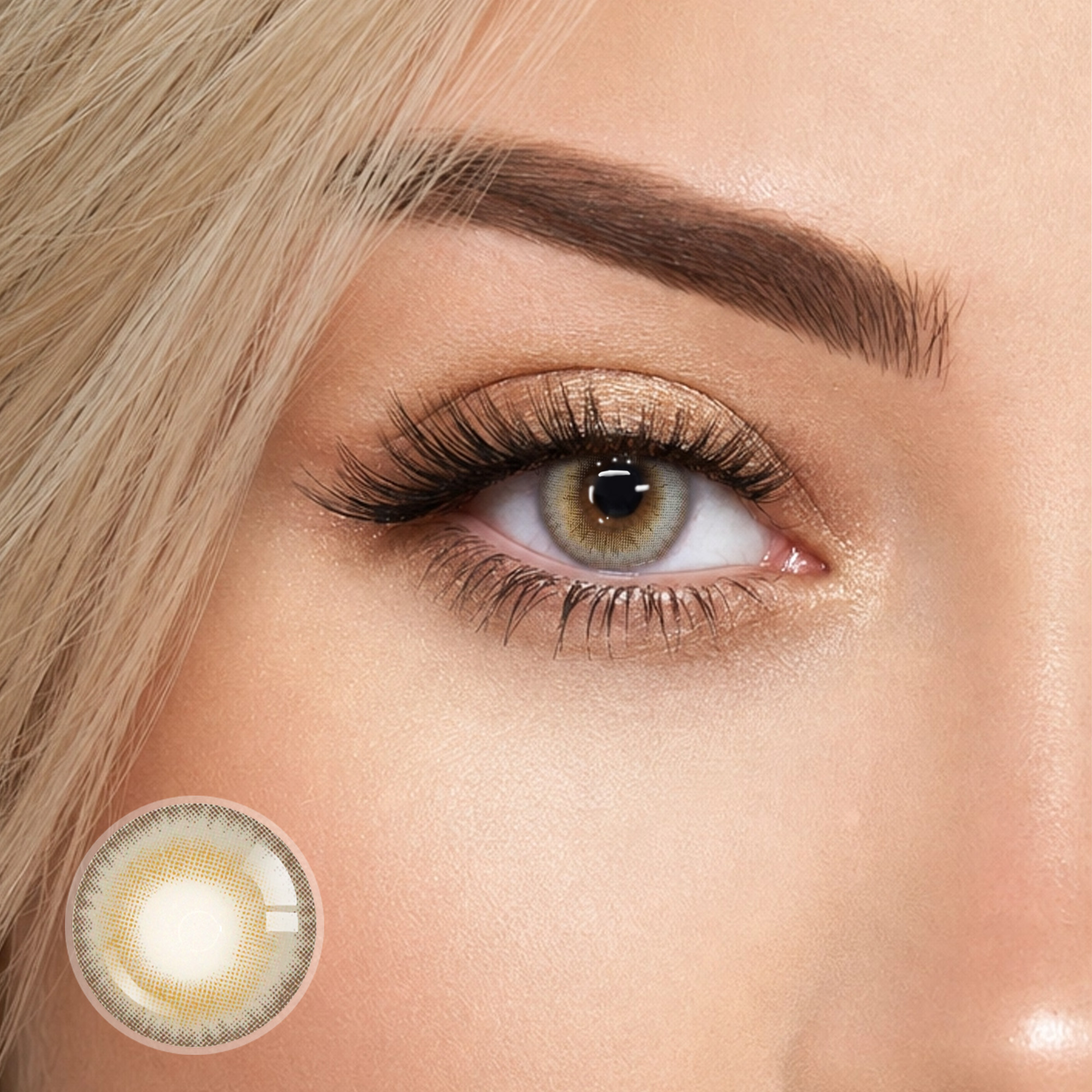
A soft, warm-toned grey that reads as effortlessly natural on brown eyes. If your goal is "same you, but with a slight change in eye color that people can't quite put their finger on," this is where to start.
Why does it show up on dark eyes:
LA Girl Grey uses a medium-high opacity warm pigment that layers with your natural iris rather than fighting against it — the heat of the grey melds with the golden and reddish undertones already in your eye, so the color reads as truly yours. A soft radial blend in the optical zone prevents your dark center from breaking through, and a clearly defined limbal ring gives your eyes that "naturally enhanced" definition. Ideal for warm-toned brown eyes.
2. Megan Fox — The Statement Cool Grey
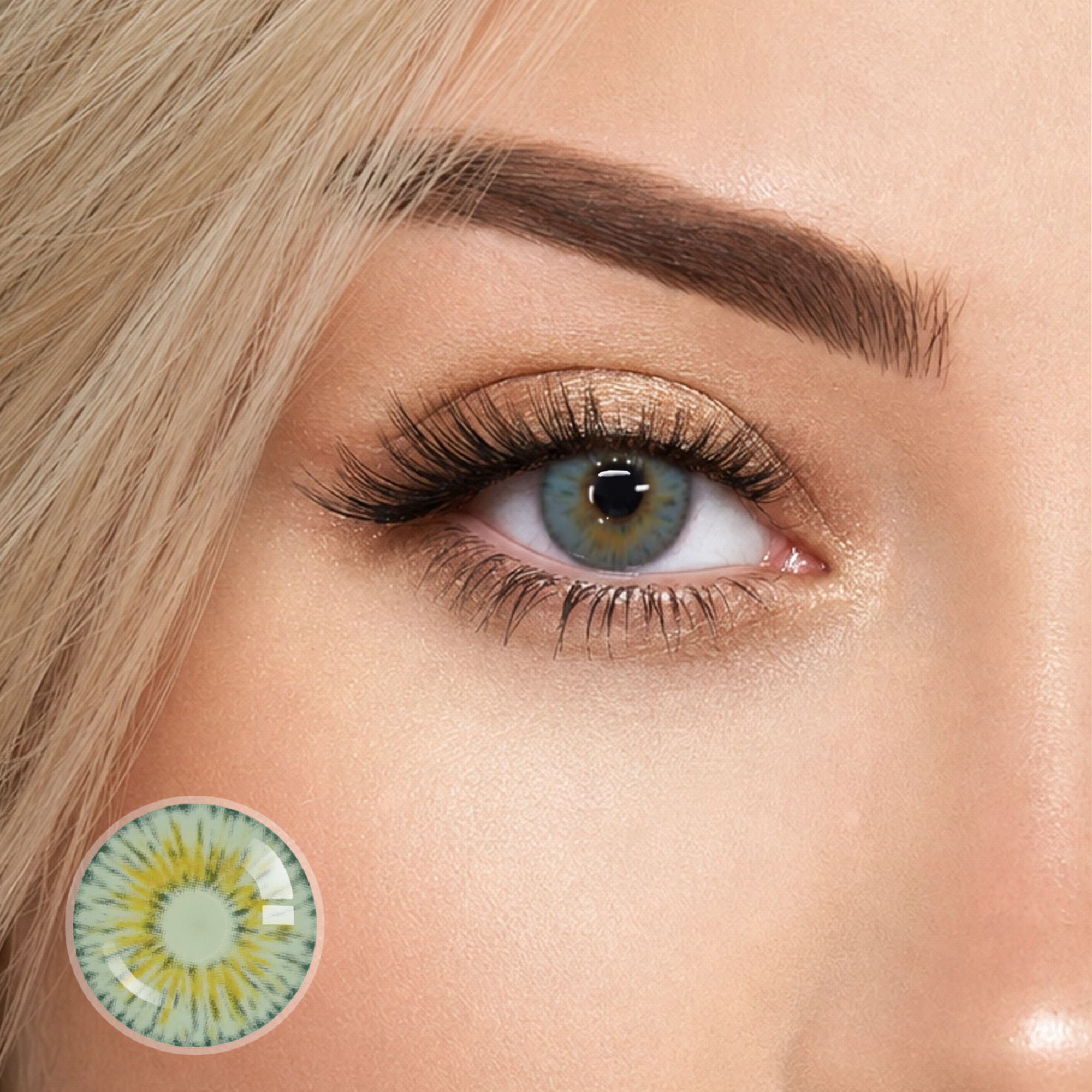
A high-impact, multi-tonal grey with an unmistakably striking gaze. If you've ever been drawn to that piercing, cinematic eye look — the kind that reads as intentional the moment someone glances at you — this is the one.
Why does it show up on dark eyes:
Megan Fox is built on full multi-tonal opacity, meaning multiple shades of grey are layered into the pigment, so the color reads with real depth instead of flattening out on dark irises. The bold, high-contrast limbal ring frames the iris dramatically, and the deep, dimensional pupil zone creates that hypnotic sense of depth. Best on cool-toned or neutral brown eyes, where the ashy tones can shine.
3. Coconut Ash Grey — The Everyday Cool Grey
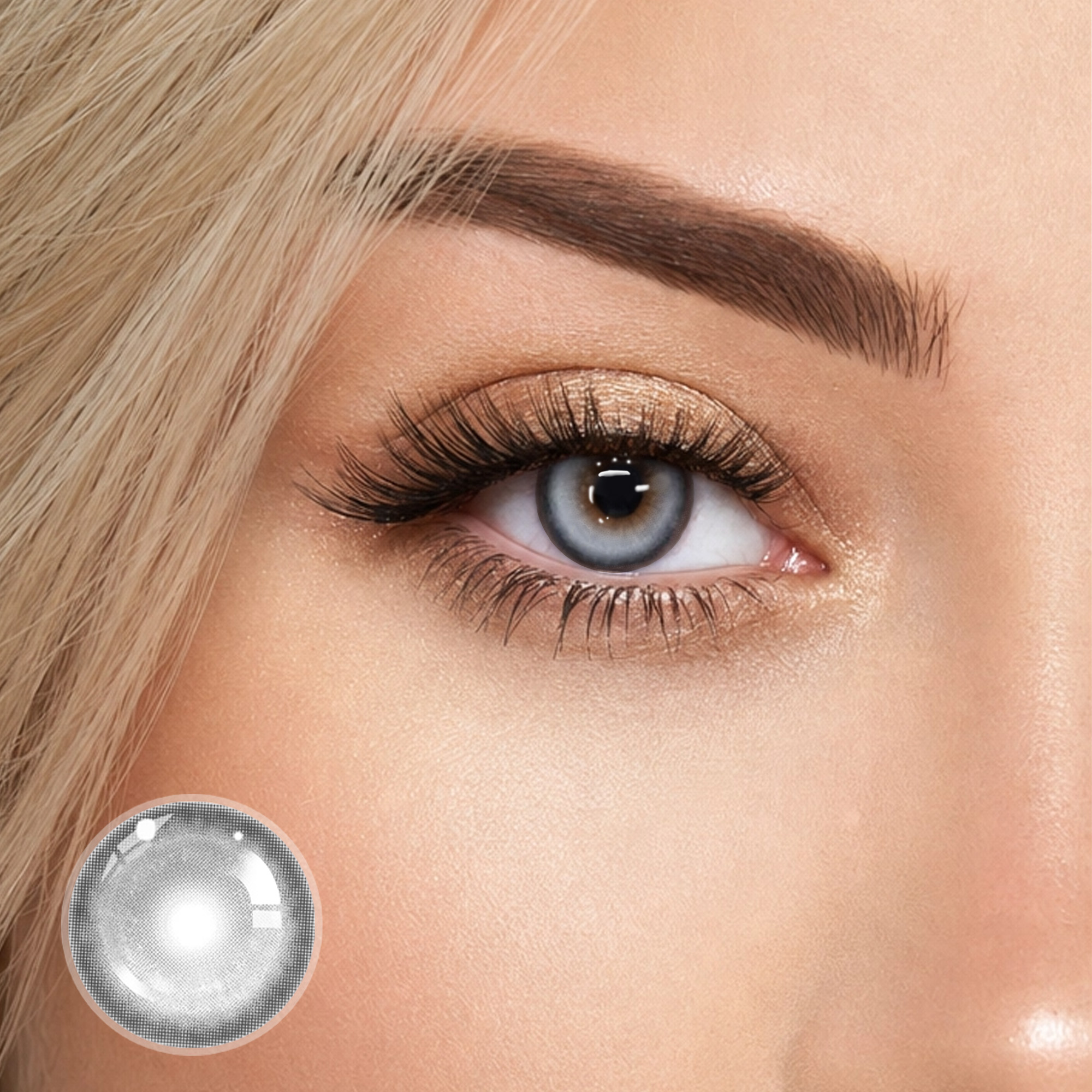
A clean, cool-toned grey with a smooth, understated finish. Think of it as the wearable cool-grey — full pigment coverage, but styled softly enough for daily wear, work, coffee runs, and everything in between.
Why does it show up on dark eyes:
Coconut Ash Grey delivers full cool-toned opacity that cleanly shifts your iris color without any warm residue peeking through — critical for anyone whose brown eyes have naturally cool undertones. The ultra-smooth optical zone transition is one of the softest in our lineup, so the shift from pupil to color seems seamless rather than "layered on." A subtle limbal ring keeps the look understated, letting the color itself do the talking. The most versatile pick if you want a cool grey that works with almost any makeup.
Not sure which one is right for you?
Here's a quick reference:
|
If you want... |
Try |
|
Subtle, warm, "is that her natural color?" |
|
|
Bold, cinematic, statement gaze |
|
|
Clean, cool, everyday-wearable |
- [Hazel & Honey Lenses →] — Soft, warm everyday enhancement. The most natural-looking shift on dark eyes.
- [Light Brown Lenses →] — Subtle tone change that works on both warm and cool undertones. Friendly for first-time wearers.
- [Gray Lenses →] — Smoky, cool-toned, editorial. Best with high opacity to truly show on dark eyes.
- [Green Lenses →] — Olive and forest greens that look surprisingly natural on brown eyes.
- [Blue Lenses →] — For a clear color shift. Choose our most opaque, multi-tonal designs to make blue actually read on dark eyes.
- [Violet & Pink Lenses →] — A subtle glow rather than a full color change. For festivals, photography, and soft aesthetic looks.
Final Takeaway
- Colored contacts do work on dark eyes — when you choose by structure, not just by color name.
- Opacity, optical zone, limbal ring, and undertone are the four real variables behind a lens that actually show up.
- The goal isn't to mask your eyes. It's to find a lens that lets you look like you, with a new kind of light in it.
FAQ
Q: Will brown contacts show up on dark brown eyes?
A: Only if they're fully opaque and in a shade slightly lighter or warmer than your natural eye color. Standard brown enhancement tints typically blend in and do nothing.
Q: What's the most natural-looking color for dark eyes?
A: Hazel, honey, and light brown shades create the softest, most natural enhancement on dark eyes. Olive green works surprisingly well for those who want something noticeable but believable.
Q: Can blue contacts really show on near-black eyes?
A: Yes — but only if they're fully opaque, multi-tonal, and have a defined limbal ring. Translucent blue lenses will mostly turn greenish or muddy on dark eyes.
Q: Do I need a prescription for colored contacts if I have perfect vision?
A: Yes. The FDA classifies all colored contact lenses, including non-corrective decorative ones, as medical devices that require a valid prescription.
Q: Why do my colored contacts look fake?
A: Most often, the issue is the optical zone (clear center too large or too sharp-edged) or a missing limbal ring — not the color itself.
Q: Are opaque colored contacts safe for daily wear?
A: They are, when they're FDA-registered, properly fitted, and cared for according to the instructions. Always remove them before sleeping unless your eye doctor has explicitly approved overnight wear.
Learn More
- How to Put In Colored Contacts for Beginners
- The Best Doll Makeup Looks for 2026: 6 Dolly Lenses & How to Wear Them
- Where to Buy Colored Contacts Safely? Are AliExpress and Shein Colored Contacts Worth the Risk?
- What Colored Contacts Should You Wear for Ariana Grande Concert Makeup?
- First Time Wearing Colored Contacts? How to Put Them In Easily and Safety
- Why Do Some Colored Contacts Feel Like Nothing? The Secret to Ultra-Comfortable Lenses
- Can I Wear Colored Contacts All Day? What 8+ Hours Actually Feels Like
- What If You Were Invited to the Wedding of the Century? A Guide to Guest-Worthy Eyes
References
- U.S. Food and Drug Administration (FDA). Decorative Contact Lenses.
- American Academy of Ophthalmology (AAO). Are Colored Contact Lenses Safe? By Kierstan Boyd.
- American Academy of Ophthalmology (AAO). Contact Lens Risks & Care.
- Centers for Disease Control and Prevention (CDC). Healthy Contact Lens Wear and Care.
- American Optometric Association (AOA). Contact Lenses.
- American Optometric Association (AOA). Caring for Your Contacts.
Disclaimer
This article is for educational purposes only and is not a substitute for advice from a licensed eye care professional. If you experience pain, persistent redness, blurred vision, discharge, or any unusual sensation while wearing contact lenses, remove them immediately and consult an eye doctor.
Comment